
GVSU initiatives strengthen support for foster youth, from infant to college-age
STORY BY MICHELE COFFILL
PHOTOS BY KENDRA STANLEY-MILLS
Frustrated by the gaps between the health care and child welfare systems she encountered as a foster and adoptive parent, Grand Valley faculty member Christina Quick turned to her expertise as a nurse practitioner and set out on what she told her husband was a mission to change the world.
Or, at least change the world for the children and youth in Kent County who experience barriers to timely health care, a systemic problem throughout Michigan and the country.
In 2023, the Kirkhof College of Nursing received a $195,600 grant from the Michigan Health Endowment Fund to begin a project, "Fostering Futures: Partners in Community, Behavior, and Health Care," assessing the inconsistencies and roadblocks foster and adoptive parents experienced when seeking behavioral and physical health care for the children in their charge.
Quick led that project and, during the following year, nursing faculty members Emily Bemben and Amy Rohn joined the project team. Their first step was to establish a countywide advisory council that included foster/adoptive parents and stakeholders from social service, education and health care organizations.

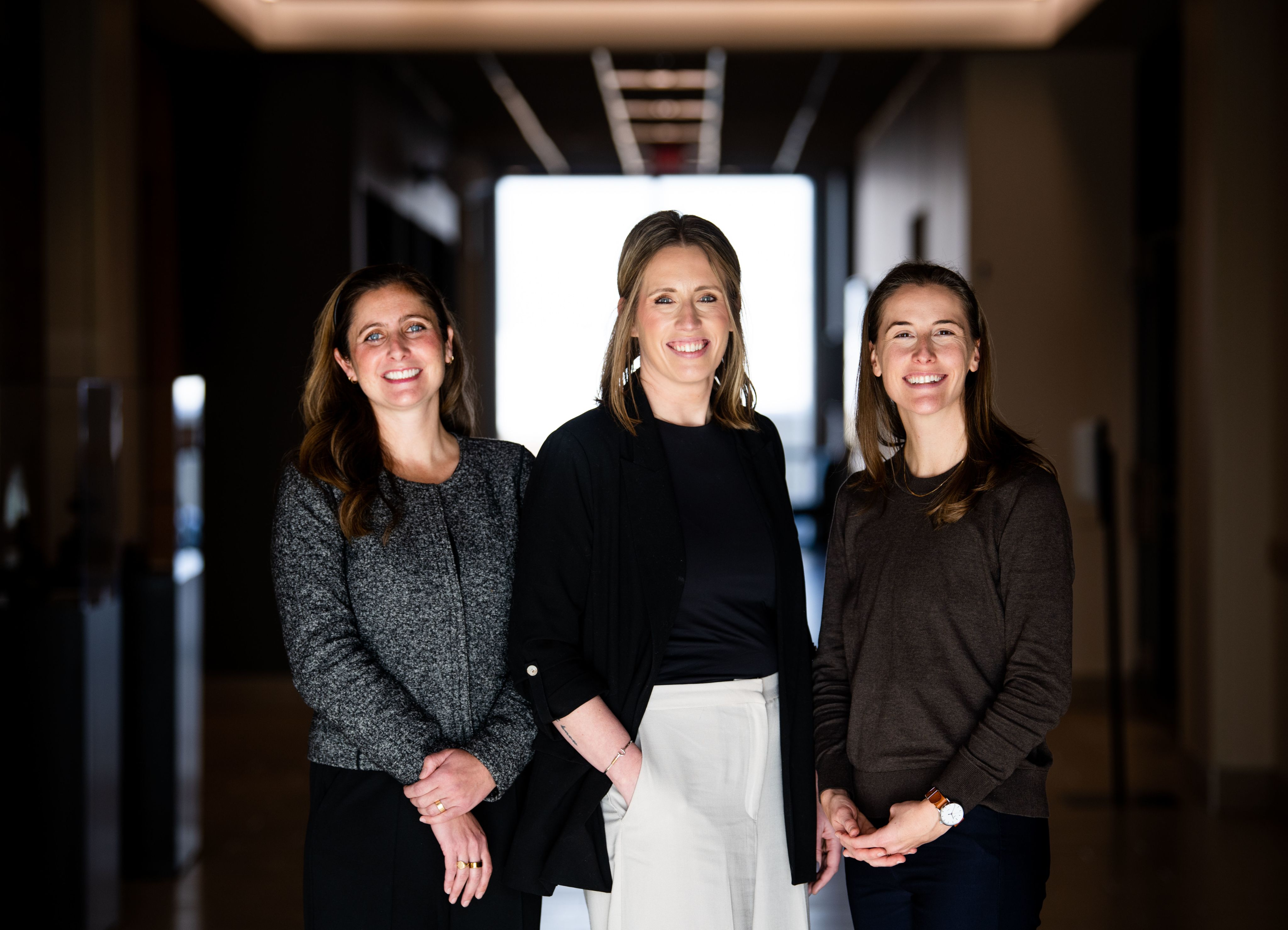
From left, KCON faculty members Amy Rohn, Christina Quick and Emily Bemben.
From left, KCON faculty members Amy Rohn, Christina Quick and Emily Bemben.
Through surveys and focus groups, the advisory council facilitated a needs assessment that revealed significant gaps in care continuity for children and youth in foster care, gaps in provider knowledge and gaps in policies. The project team said the gaps left complex health needs unmet and resulted in missed opportunities for early intervention.
With consensus from the advisory council and buoyed by a second grant from the Michigan Health Endowment Fund for $499,562, the team's work now moves toward implementing a trauma-informed, mobile, integrated health care model that would screen foster children within 72 hours of their placement, provide coordinated care and improve continuity of care.
If the pilot program, which is expected to be launched later this year, is successful, Rohn said it's a model that could easily be replicated throughout Michigan and nationally.
The effort to improve care for children in foster placements is part of a broader continuum of support at Grand Valley that extends well beyond early childhood and includes the Fostering Laker Success Program.

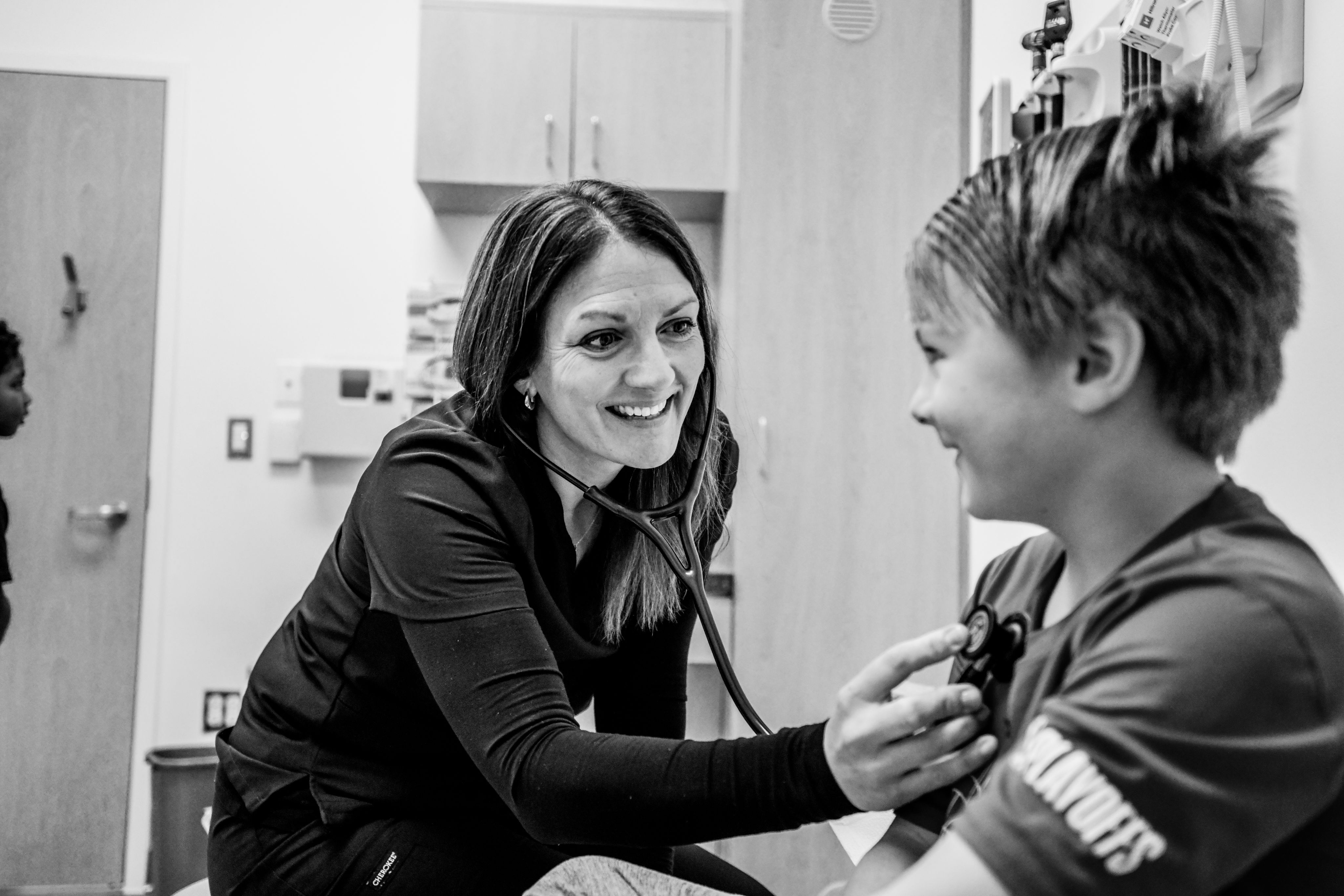

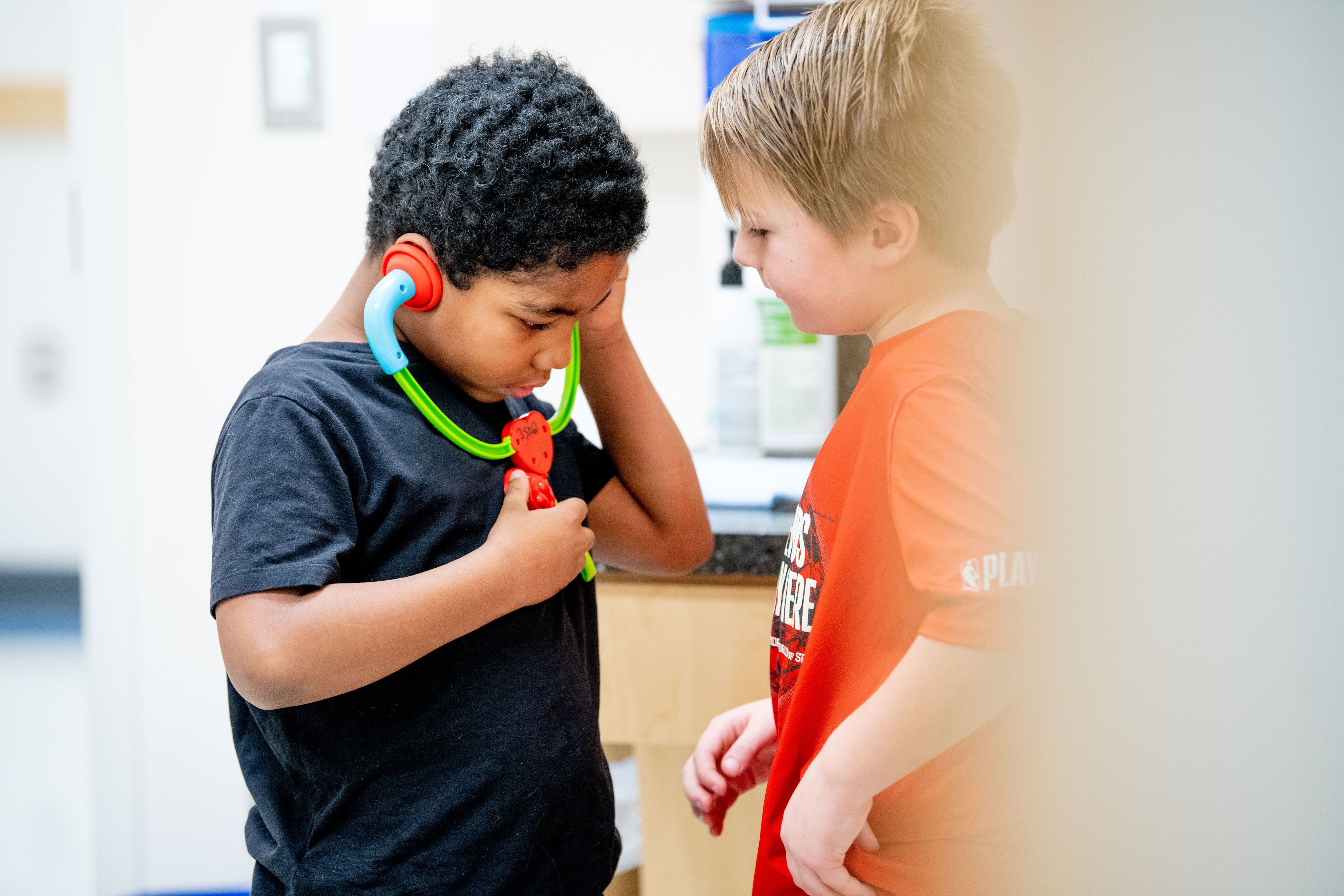
"I remember an overwhelming sense that these kids are just shuffled around and they're not getting the services that they need."
Emily Bemben, assistant professor of nursing

'Kids are shuffled around'
Nationally, children and youth in foster care are a vulnerable population, as most have chronic health conditions and 80 percent have significant mental health challenges.
Bemben, assistant professor of nursing and a psychiatric mental health nurse practitioner, said part of the reason she chose a nursing career was her early experience working with youth in foster care.
"I remember an overwhelming sense that these kids are just shuffled around and they're not getting the services that they need," she said. "Once, I picked up a kid from the dentist, where he had 12 cavities filled. Later that day, I mentioned that appointment to a different kid and he asked, 'What's a cavity?'"
Quick and her husband, Jabin, could easily add their own experiences with their two sons, who they adopted from foster placements. While close in age, Quick said the boys represented the opposite ends of the spectrum in terms of their health care needs.
"With our second child, we realized quickly there were gaps in our health care providers and what kinds of questions were being asked," Quick said. "He was likely malnourished and neglected, conditions that went unnoticed because he had not been seen by a provider since shortly after his birth.
"He was 5 months old at the time."


'Kids are shuffled around'
Nationally, children and youth in foster care are a vulnerable population, as most have chronic health conditions and 80 percent have significant mental health challenges.
Bemben, now a psychiatric mental health nurse practitioner, said part of the reason she chose a nursing career was her early experience working with youth in foster care.
"I remember an overwhelming sense that these kids are just shuffled around and they're not getting the services that they need," she said. "Once, I picked up a kid from the dentist, where he had 12 cavities filled. Later that day, I mentioned that appointment to a different kid and he asked, 'What's a cavity?'"

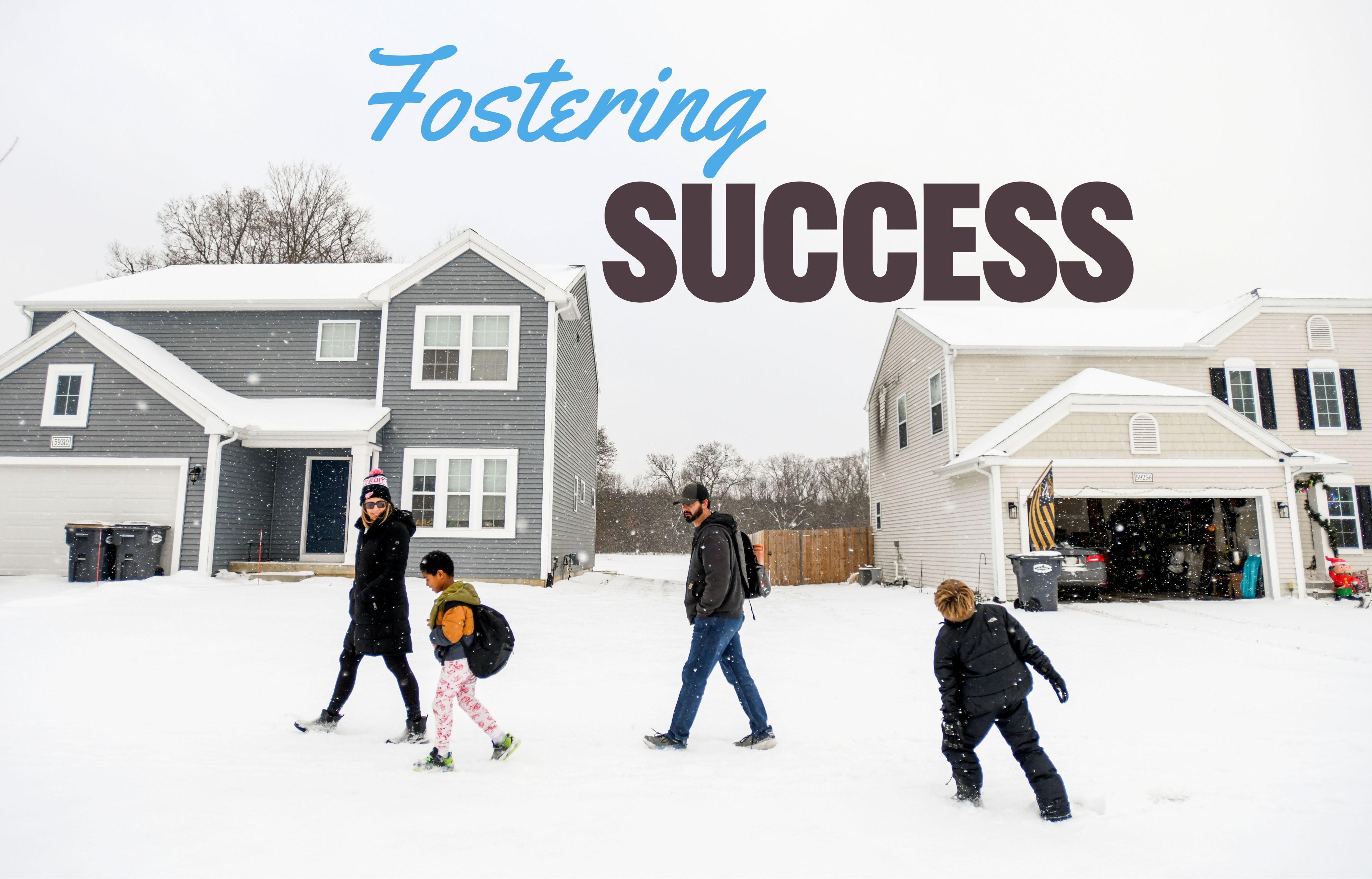
Christopher Quick, 7, left, and Alexander Quick, 6, walk home from their school bus stop on December 19, which was 'Pajama Day.'
Christopher Quick, 7, left, and Alexander Quick, 6, walk home from their school bus stop on December 19, which was 'Pajama Day.'
Quick and her husband, Jabin, could easily add their own experiences with their two sons, who they adopted from foster placements. While close in age, Quick said the boys represented the opposite ends of the spectrum in terms of their health care needs.
"With our second child, we realized quickly there were gaps in our health care providers and what kinds of questions were being asked," Quick said. "He was likely malnourished and neglected, conditions that went unnoticed because he had not been seen by a provider since shortly after his birth.
"He was 5 months old at the time."
Changing the world
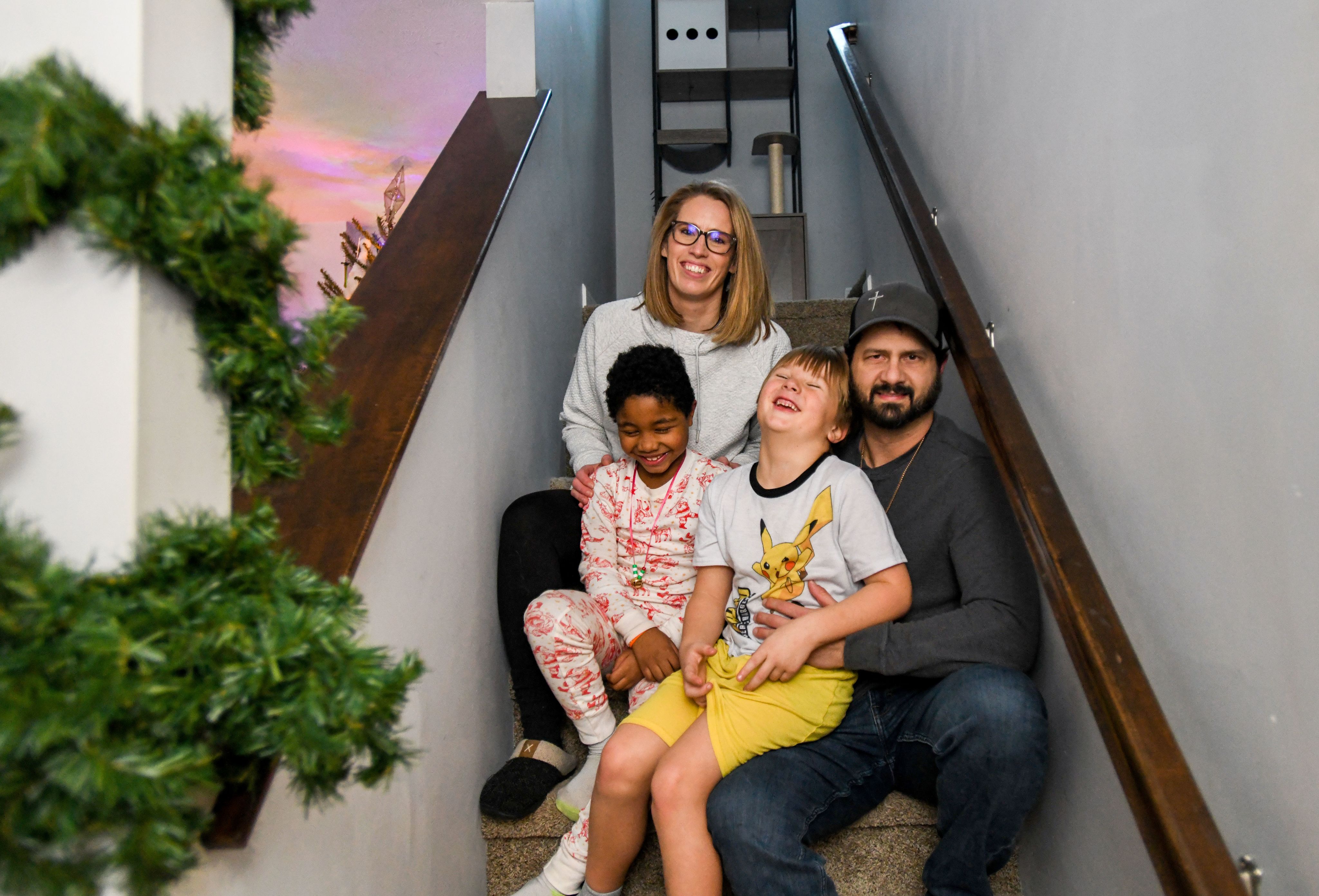
Christina and Jabin Quick are foster and adoptive parents. Their family experiences with health care and child welfare systems led Christina, a KCON faculty member, to lead a grant-funded project to address gaps in health care for Kent County children and youth in foster care.

Changing the world
Christina and Jabin Quick are foster and adoptive parents. Their family experiences with health care and child welfare systems led Christina, a KCON faculty member, to lead a grant-funded project to address gaps in health care for Kent County children and youth in foster care.

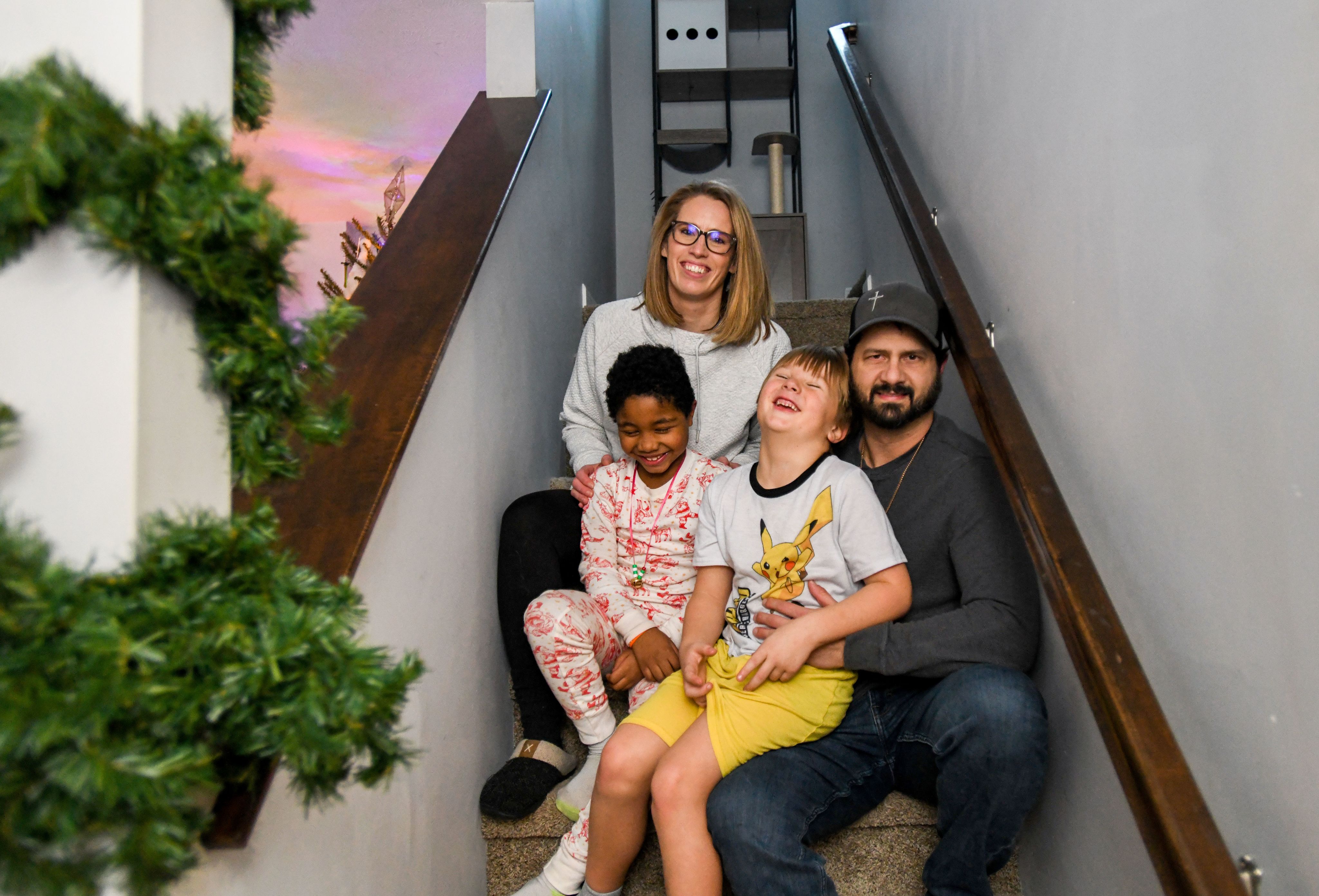
Christina and Jabin Quick laugh with their two sons, Alexander, 6, and Christopher, 7, in their Mattawan home December 19.
Christina and Jabin Quick laugh with their two sons, Alexander, 6, and Christopher, 7, in their Mattawan home December 19.




A child-centered approach
Those experiences led Quick to seek community support, locally and nationally, including as a member of the National Association of Pediatric Nurse Practitioners Partners for Vulnerable Youth. "Some of the work that we will be doing at that level is looking to identify the best model for a national health model for children in foster care," she said.
In West Michigan, the advisory council recommended implementing an integrated care model via a mobile health care hub. Key components include a health screening within 72 hours of placement, comprehensive assessments after 30 days, and use of electronic health records that are shared among health care and child welfare teams.
It's an ambitious project, certainly. Advisory council member Sonia Noorman, CEO of the West Michigan Partnership for Children (WMPC), said it's a child-centered approach to transforming a system marred by inconsistent policies, burnout among caregivers and lack of knowledge by providers. WMPC serves as the foster care administrator in Kent County.

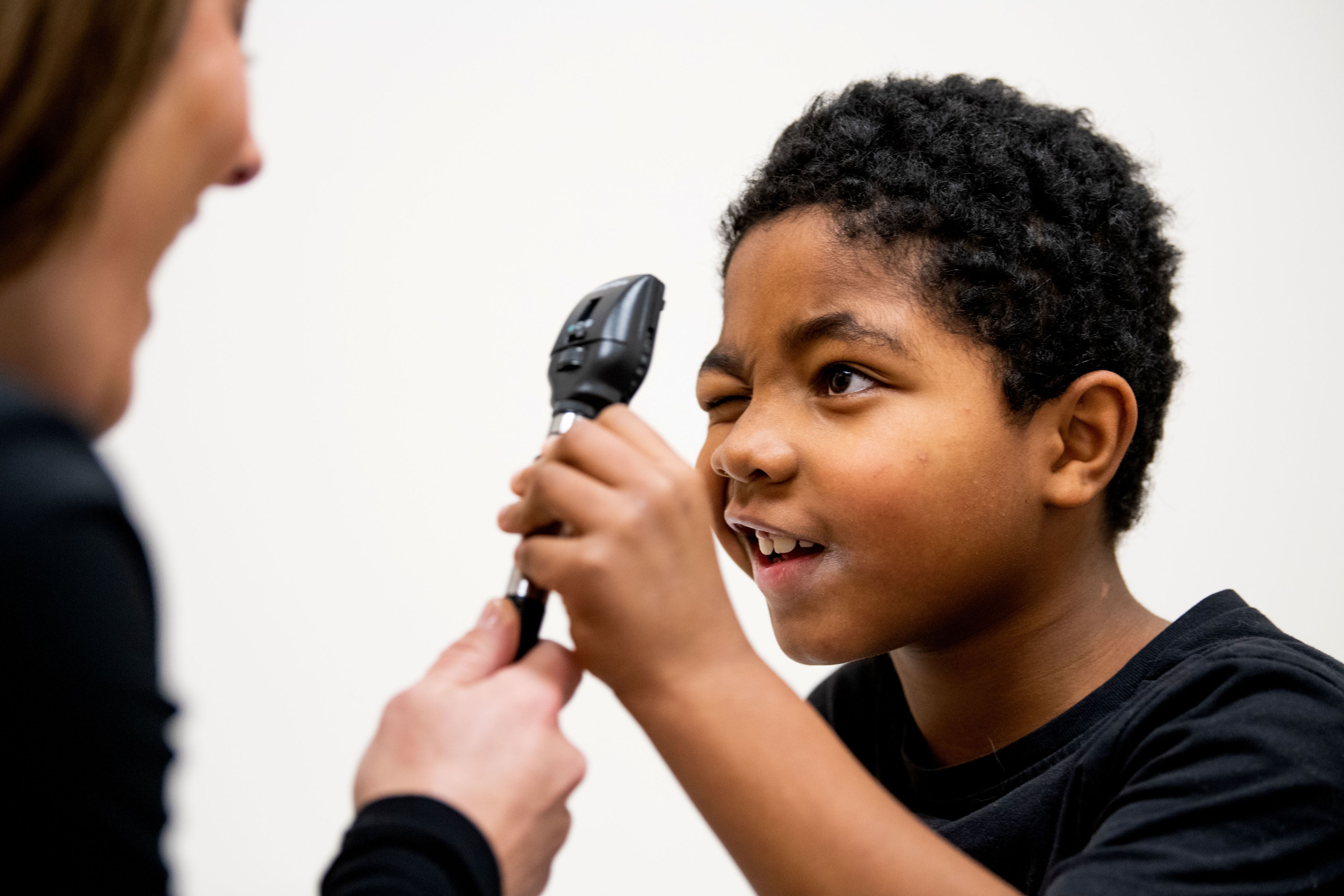
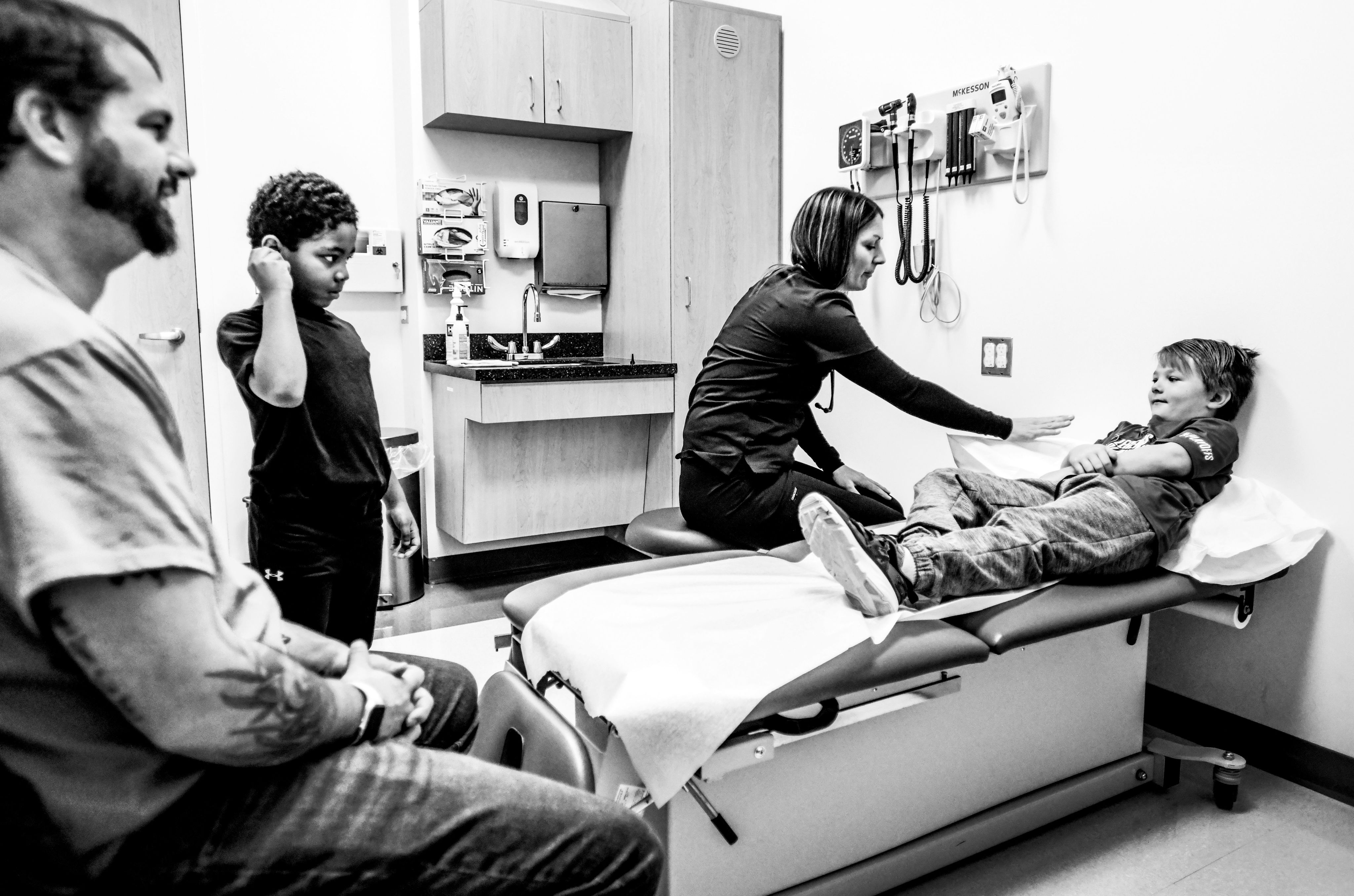
Hilary Marine ’08, left, talks with Christopher Quick about health checkups.
Hilary Marine ’08, left, talks with Christopher Quick about health checkups.
"This pilot will create a more timely, thorough and wraparound approach to meeting each child’s physical and mental health needs," Noorman said. "It offers a coordinated model that improves stability, reduces gaps in care and supports healing from trauma.
"Ultimately, it presents a policy direction that centers the whole child and ensures they receive the continuity and quality of care they deserve."
Joann Hoganson is the divisional director of community wellness for the Kent County Health Department. A frequent community partner on various KCON initiatives, Hoganson said it was important to "lock arms" with the Fostering Futures project team to ensure foster children experience the best possible care.
"This coalition helped me address one of the key responsibilities of our public health department: to assess and promote access to appropriate and quality health care for all residents of our community," she said. "It is important to consider if health care providers have the knowledge and skill to provide quality health care to specific populations such as families with foster children."
“Whether you care for children or adults, recognizing that experiences in childhood can significantly influence health across the lifespan is an essential component of nursing education.”
Amy Rohn, assistant professor of nursing
‘An important component of nursing education’
Rohn, assistant professor of nursing and a pediatric nurse for more than two decades, first learned about Adverse Childhood Experiences (ACEs) and their lifelong impact during her doctoral studies. Now an ACEs Community Champion, she is a certified advocate who educates the community about ACEs and promotes trauma-informed practices that foster resilience. In this role, she has made it her mission to ensure that KCON undergraduate students understand the role childhood adversity plays in health outcomes.
“It’s important to me that our nursing students graduate with a strong understanding of childhood adversity and the impact it can have on a person’s health,” Rohn said. “Whether you care for children or adults, recognizing that experiences in childhood can significantly influence health across the lifespan is an essential component of nursing education.”
The pilot project to bring mobile health care to foster children was built to serve 200 children in Kent County. Work remains before hiring a team, but Quick said there have been many successes since this work began in 2023, including engagement from the advisory council and unification toward a common goal.
Advisory council member Lauren Gamelin VanKeulen agreed. VanKeulen works with older youth as the CEO for AYA Youth Collective, which serves young people ages 14-24 who are facing homelessness.
"Coordinating care, in trauma-informed ways, will result in more stable outcomes for youth who have been involved in the system," she said. "This will translate to more stable housing and wraparound supports for youth who are aging out as well."


‘An important component of nursing education’
Rohn, a nursing faculty member and pediatric nurse for more than two decades, first learned about Adverse Childhood Experiences (ACEs) and their lifelong impact during her doctoral studies. Now an ACEs Community Champion, she is a certified advocate who educates the community about ACEs and promotes trauma-informed practices that foster resilience. In this role, she has made it her mission to ensure that KCON undergraduate students understand the role childhood adversity plays in health outcomes.
“It’s important to me that our nursing students graduate with a strong understanding of childhood adversity and the impact it can have on a person’s health,” Rohn said. “Whether you care for children or adults, recognizing that experiences in childhood can significantly influence health across the lifespan is an essential component of nursing education.”

Christina and Jabin Quick hang out in the kitchen with their two sons, Christopher, 7, left, and Alexander, 6, after getting home from school December 19.
Christina and Jabin Quick hang out in the kitchen with their two sons, Christopher, 7, left, and Alexander, 6, after getting home from school December 19.
The pilot project to bring mobile health care to foster children was built to serve 200 children in Kent County. Work remains before hiring a team, but Quick said there have been many successes since this work began in 2023, including engagement from the advisory council and unification toward a common goal.
Advisory council member Lauren Gamelin VanKeulen agreed. VanKeulen works with older youth as the CEO for AYA Youth Collective, which serves young people ages 14-24 who are facing homelessness.
"Coordinating care, in trauma-informed ways, will result in more stable outcomes for youth who have been involved in the system," she said. "This will translate to more stable housing and wraparound supports for youth who are aging out as well."
Support during college
Youth who have experienced foster care have support for their journey at Grand Valley. The Fostering Laker Success program provides comprehensive support to students who have been in eligible foster care placements at age 14 or older.
Program coordinator Brandy Thompson said it's rewarding to work with this special population of students.
"Helping someone realize how education can change their life, and seeing the growth and the positivity they gain is really great," said Thompson, who had worked as an academic advisor at a community college TRIO program for 10 years before stepping into this role more than five years ago.
The program was established at Grand Valley in 2017 with a grant from the Michigan Department of Health and Human Services that was renewed in 2022. Donors are a vital component of Fostering Laker Success, including former faculty members John and Cindy Shinsky, who established an endowment fund to support program participants.
Thompson said the endowment fund allows the program to assist students with academic, housing and personal needs that could create barriers and cause these former foster care youth to drop out of college. For the past two years, an anonymous donor provided scholarship funding to several juniors and seniors through the Fostering Laker Success Scholarship fund.
There are 37 active students in the program, with four scheduled to graduate in the spring. Nationally, Thompson said less than 10% of former foster care students earn a college degree. Since its inception, 17% of GVSU grant-funded students in the program have earned degrees.

Support during college
Youth who have experienced foster care have support for their journey at Grand Valley. The Fostering Laker Success program provides comprehensive support to students who have been in eligible foster care placements at age 14 or older.
Program coordinator Brandy Thompson said it's rewarding to work with this special population of students.
"Helping someone realize how education can change their life, and seeing the growth and the positivity they gain is really great," said Thompson, who had worked as an academic advisor at a community college TRIO program for 10 years before stepping into this role more than five years ago.
The program was established at Grand Valley in 2017 with a grant from the Michigan Department of Health and Human Services that was renewed in 2022. Donors are a vital component of Fostering Laker Success, including former faculty members John and Cindy Shinsky, who established an endowment fund to support program participants.
Thompson said the endowment fund allows the program to assist students with academic, housing and personal needs that could create barriers and cause these former foster care youth to drop out of college. For the past two years, an anonymous donor provided scholarship funding to several juniors and seniors through the Fostering Laker Success Scholarship fund.
There are 37 active students in the program, with four scheduled to graduate in the spring. Nationally, Thompson said less than 10% of former foster care students earn a college degree. Since its inception, 17% of GVSU grant-funded students in the program have earned degrees.

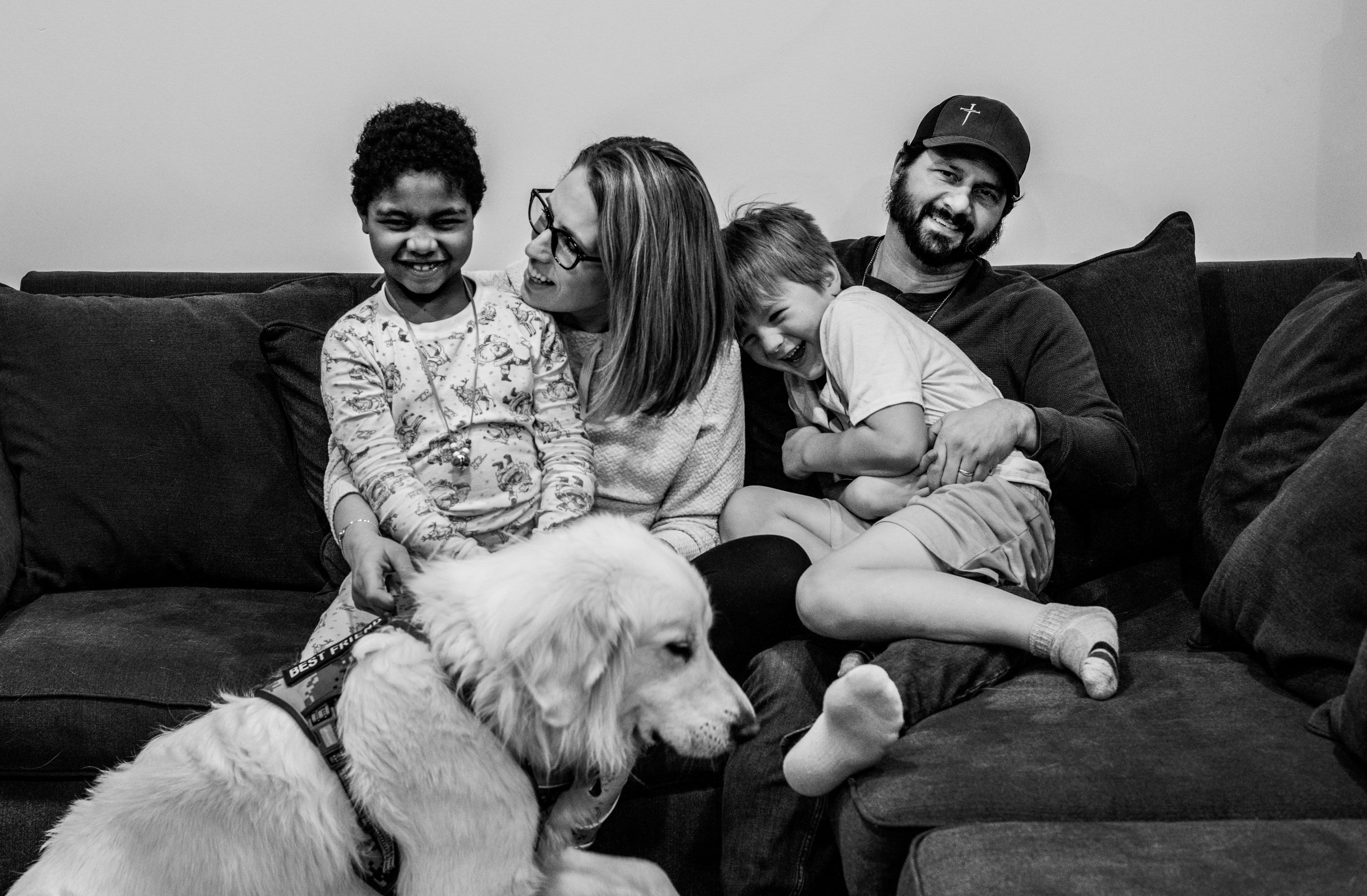
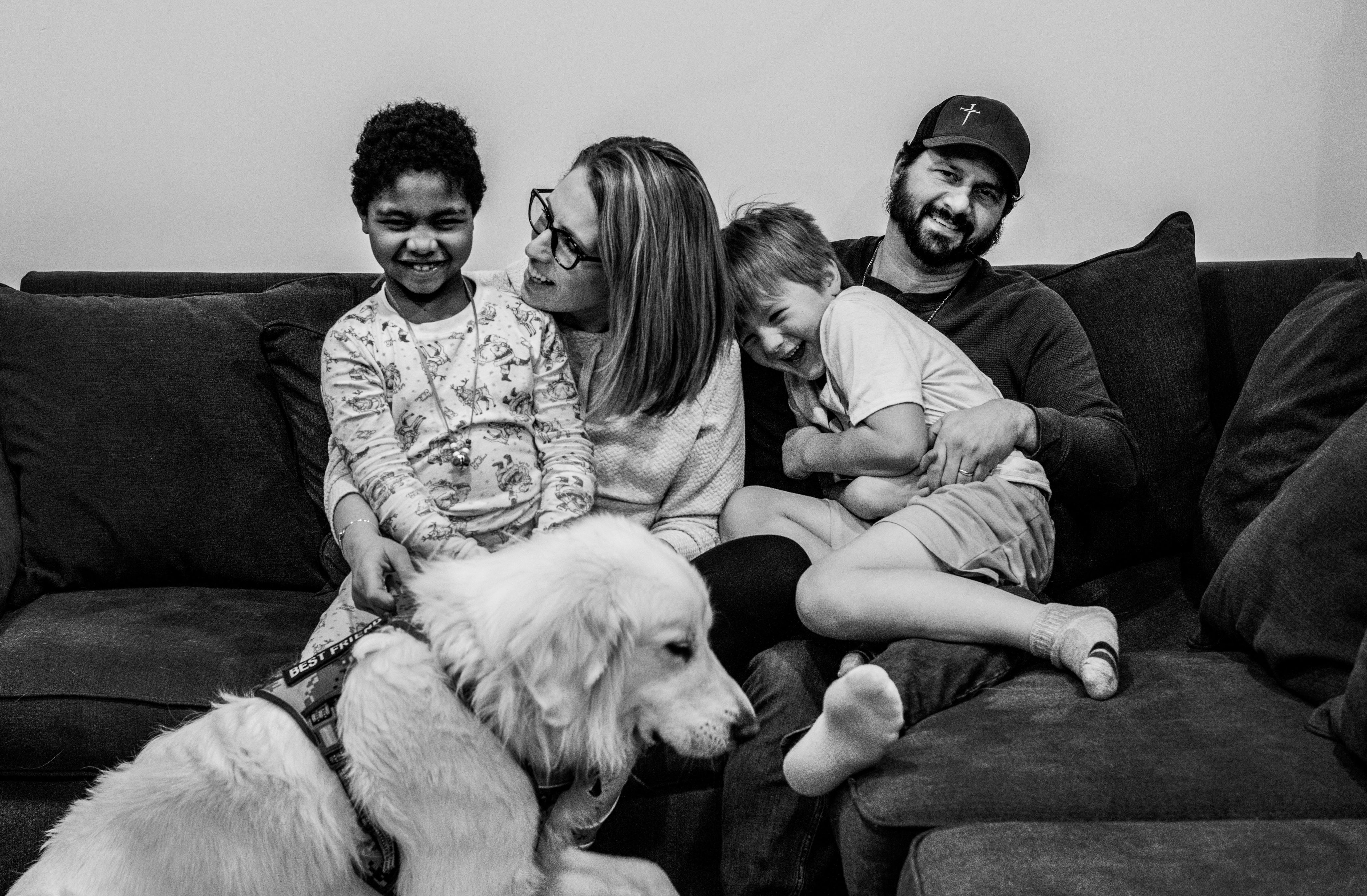
Christina and Jabin Quick laugh with their two sons, Alexander, 6, and Christopher, 7, with their family dog nearby in their Mattawan home December 19.
Christina and Jabin Quick laugh with their two sons, Alexander, 6, and Christopher, 7, with their family dog nearby in their Mattawan home December 19.