News from Grand Valley State University
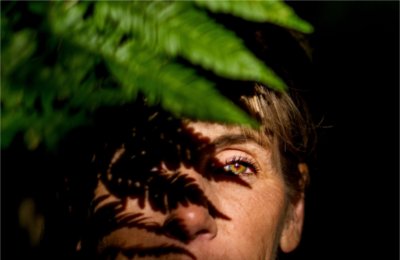
A person stands behind a leaf, with the sun and the shadow of the leaf showing.

New Padnos Distinguished Artist-in-Residence sharing art inspired by natural world – including Valley Campus outdoor installation

The newest artist to serve as the Padnos Distinguished Artist-in-Residence is deeply inspired by the environment and is working with the natural beauty of the Valley Campus to create a living art sculptural botanical garden for the GVSU community.

Maria Gambino comes to the Department of Visual and Media Arts with a long background in exploring ecology, environmental transformation and the interconnectedness of animals, plants and other species. A recent reception introduced her to GVSU.

She works in multiple mediums, including photography, video and installations, with her work widely exhibited in the United States, Canada and Europe. She has also worked in special roles at multiple universities, including “Artist in Social Practice” at Indiana University’s Environmental Resilience Institute.

As part of her role at Indiana, Gambino created an installation featuring fungi that explored the entanglement humans and other species share with these organisms that are so crucial to the environment.
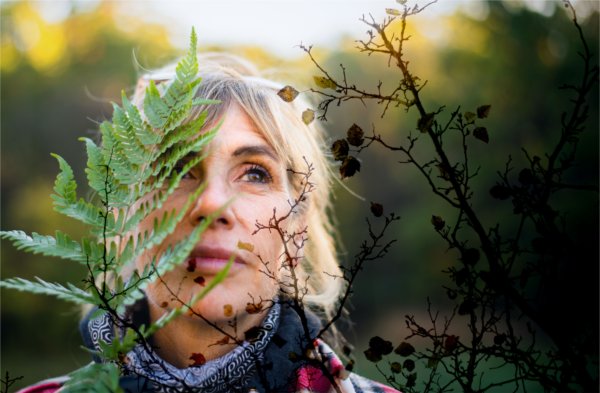
A person looks into the distance with a leaf and some brown branches in the foreground.
Maria Gambino is the new Padnos Distinguished Artist-in-Residence.

"You look at art and the art world and you can see that there are these changes occurring and artists who are doing what scientists or engineers do. By that I mean that we ask the same kinds of questions and then we're looking for those answers in ways that our work can help us resolve something," Gambino said.

Her installation near the Calder Arts Center is centered on science. A key component is her plan to depict the sun in the center of the stone garden and the planets around it, inviting visitors to contemplate the effect of the rotating planets on our world and how we are all connected as a result.

The work is already underway, with Gambino sourcing rocks, soil and other materials from local businesses and acting on advice from a Grand Valley faculty expert on the best plants to use so she can create a self-sustaining space. She said this outdoor work has given her a chance to meet folks as she levels the soil, places the heavy stones and completes other tasks.

"With this installation, what makes me most excited is that it's for other people," Gambino said. "It's not just for me. It's really for the community, it's for the art department, it's for students. And I walk away with just dirt on my hands."

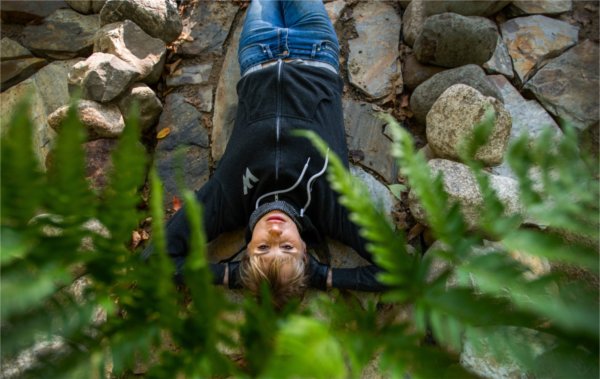
A person looks up while lying on stone. Plants are in the foreground.
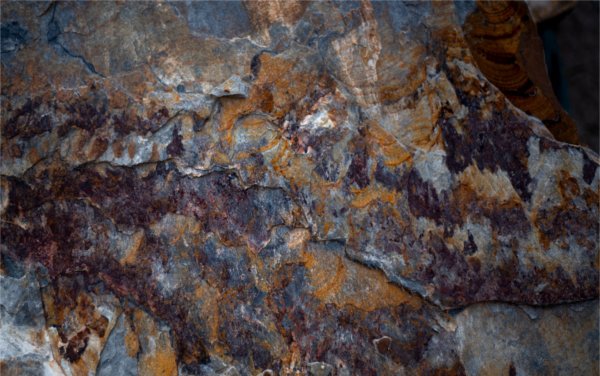
A closeup of rock with different color striations, including gray, white, rust and brown.
Maria Gambino is creating a living art sculptural botanical garden near the Calder Arts Center.

Renee Zettle-Sterling, assistant chair of the Department of Visual and Media Arts, urged students, faculty and staff members and the larger West Michigan community to engage with Gambino.

"Reach out to her, please. Maria’s art is relevant to each one of us," Zettle-Sterling said. "It is both sensitive and powerful, inspecting and reflecting on the interconnectedness of our natural world, which is especially critical in the world we live in today. Our natural world is more fragile than it has ever been, and we need to reflect deeply on our relationship with animals, plants, and mycelium. Maria’s art reflects and speaks to our humanity.”

Gambino hopes more students will engage with her when she is working in the living art sculptural botanical garden, whether to talk about the materials she is using or some of the bigger questions about working as an artist. One of the important aspects of the Padnos Distinguished Artist-in-Residence role is to help students understand the business side and marketplace of the art world.

She wants to impart the need for professionalism to work as an artist, which means ensuring true engagement with the art-making process and widely seeking opportunities such as this GVSU role to enhance enlightenment and grow an artistic practice.

That growth as a person and artist allows for a deeper reflection on what it means to produce artwork, she said.

" I'm hoping that students can get that sense of when they're making work – do they feel like they're making work that speaks to the moment that they're in? Do they feel like there's a reflection?" Gambino said. "What motivates them to really think about that? Because when you're engaged with your work and you love what you're doing, there is no sense of time. There is no 'Is this good enough or should I keep doing more? You just know.'"

Subscribe

Sign up and receive the latest Grand Valley headlines delivered to your email inbox each morning.