




STORY BY BRIAN VERNELLIS
PHOTOS BY CORY MORSE
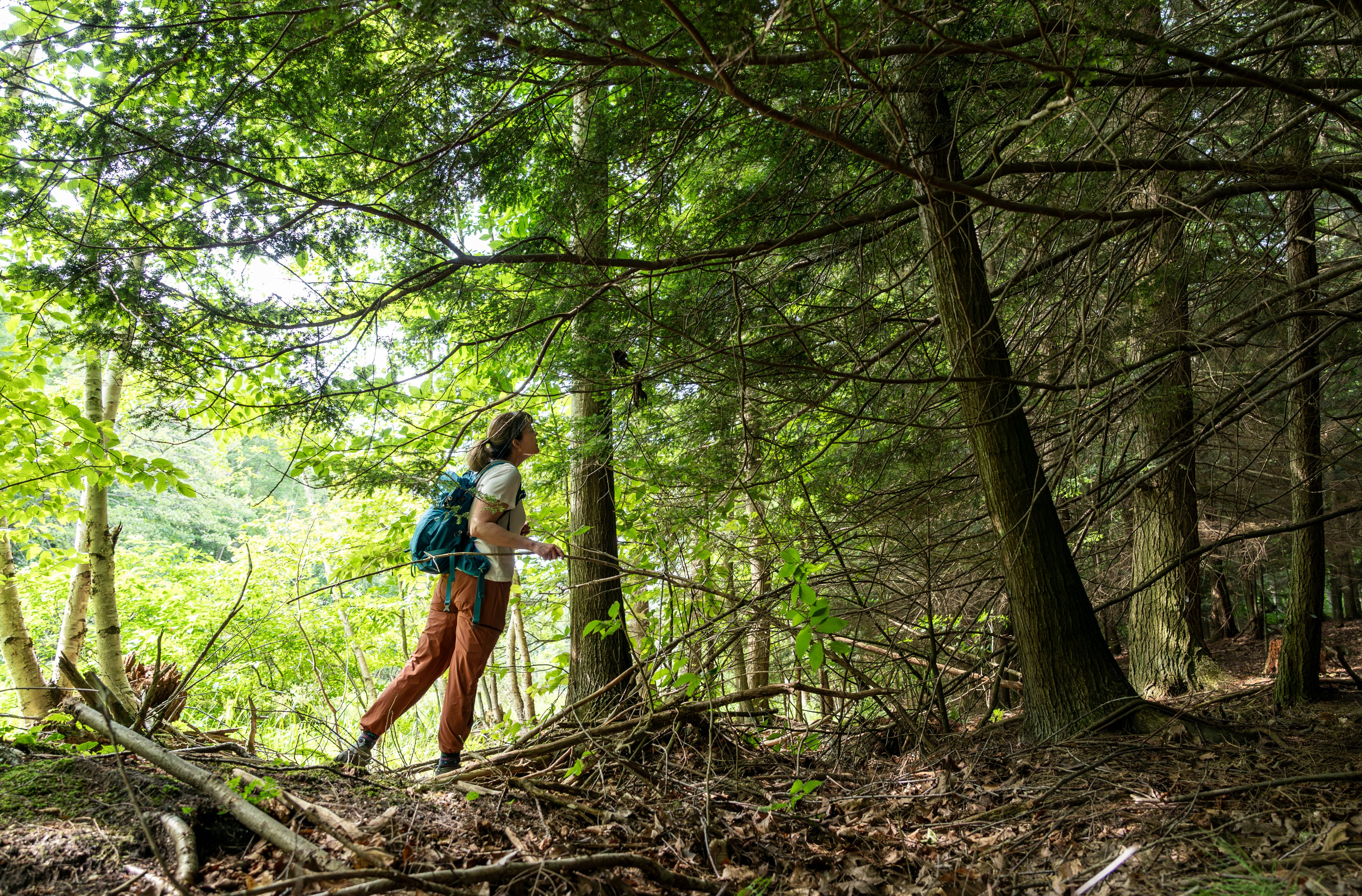
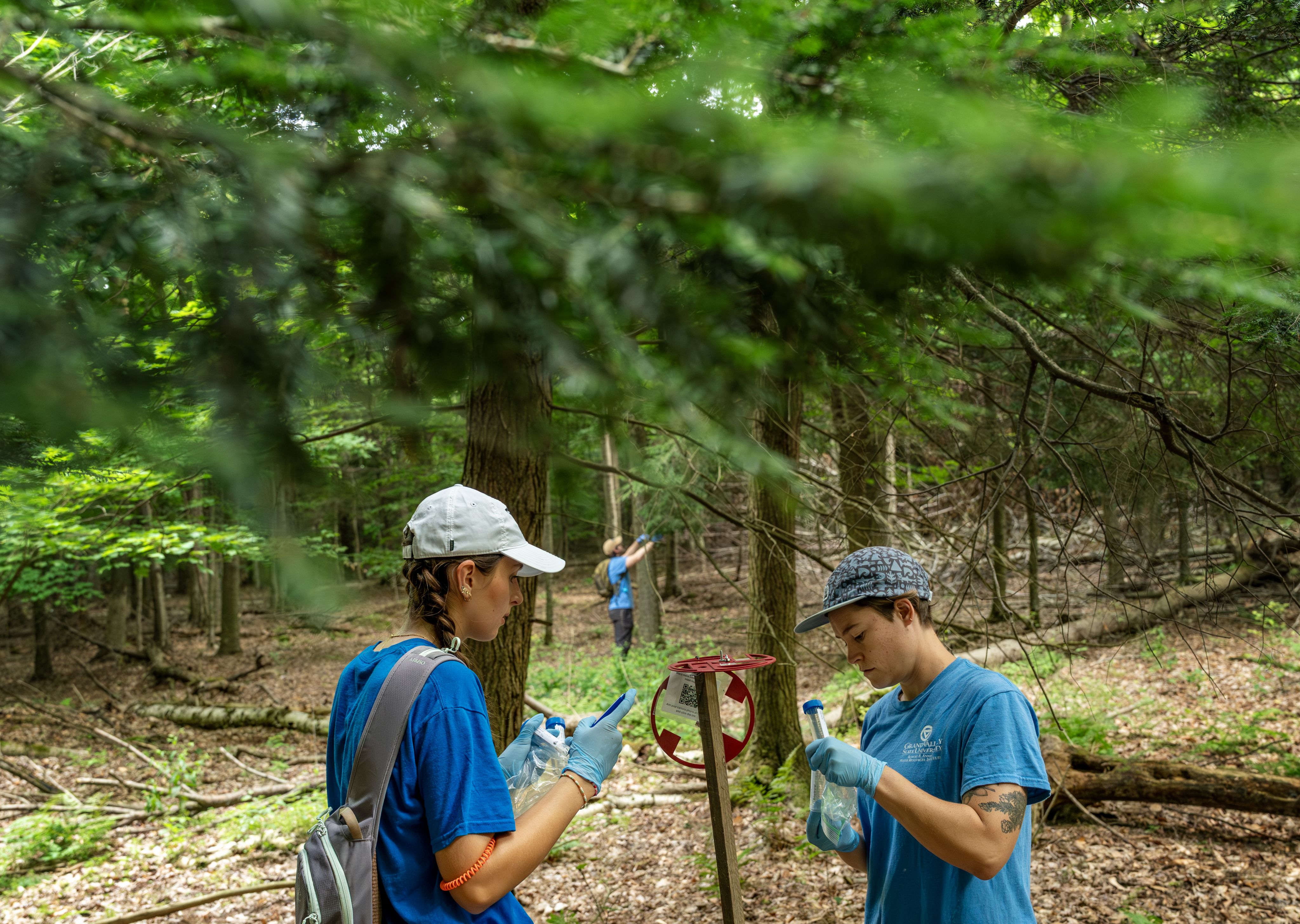
Deep within the woods surrounding Bigsbie Lake near Shelby, Charlyn Partridge and her team of student researchers from the Robert B. Annis Water Resources Institute are scaling a steep hill.
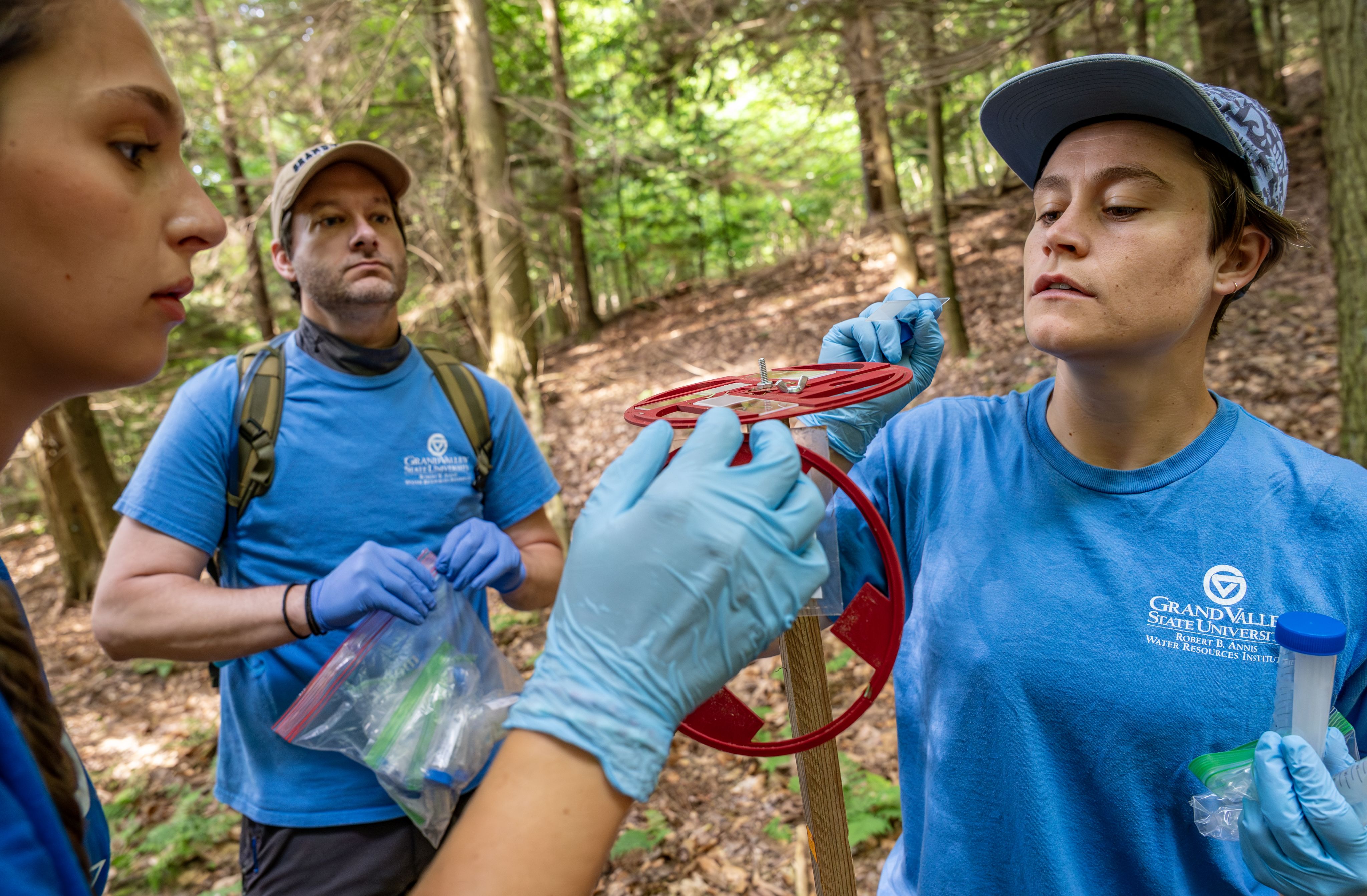
A network of roots and fallen trees obstructs the hill’s narrow path, but graduate student Grace Forthaus leads the way and the group forges on. Forthaus locates their target at the top of the climb — a thin, plastic disc attached to a stake and elevated about five feet above the forest’s floor.
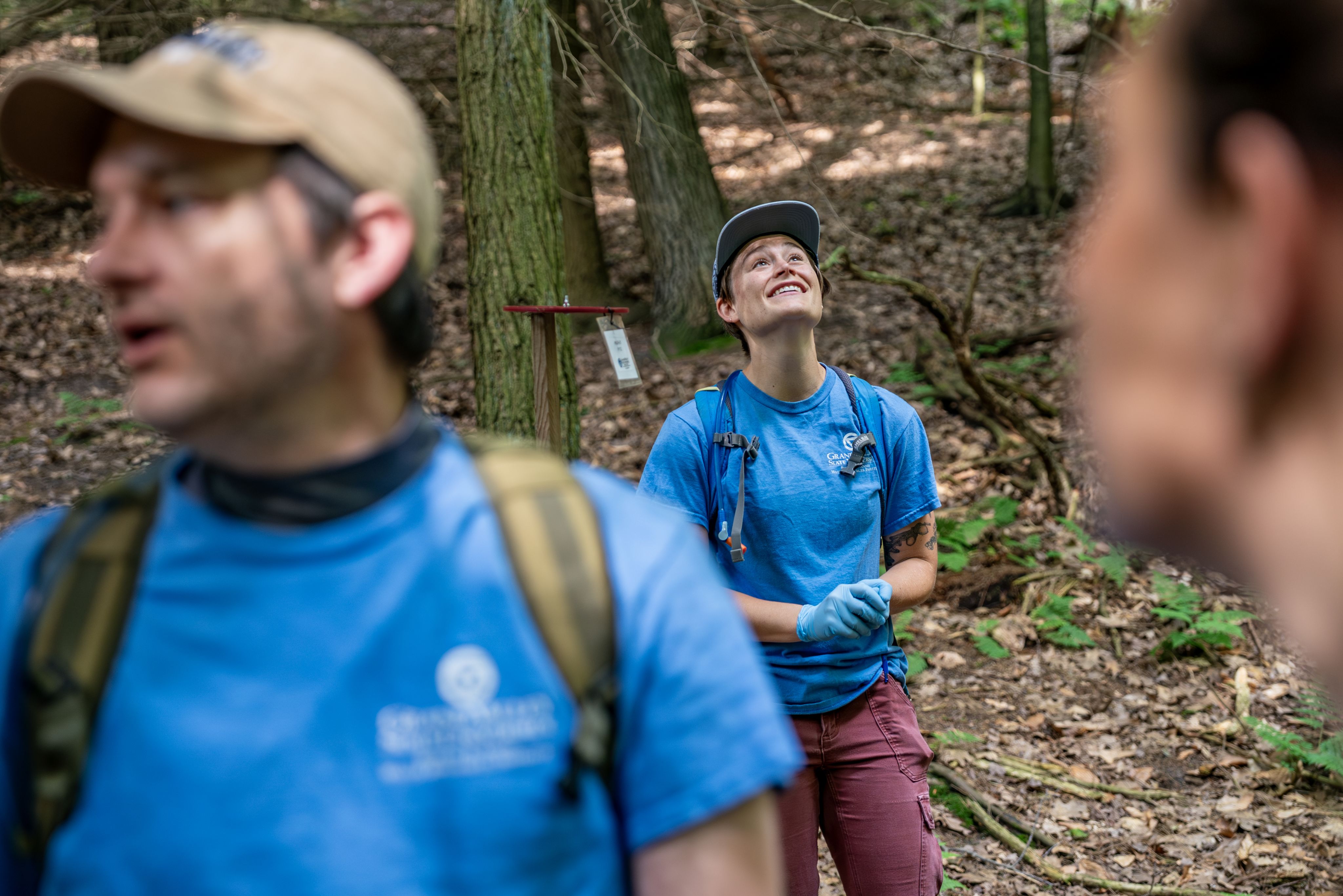
The disc, designed by another student in Partridge’s lab, Kate Geller, holds four microscope slides coated with petroleum jelly. Its purpose is simple but critical: to capture airborne environmental DNA (eDNA) from an invasive pest, the hemlock woolly adelgid (HWA). Left unchecked, HWA has the potential to devastate Michigan’s eastern hemlock population, as it has in forests across North America.

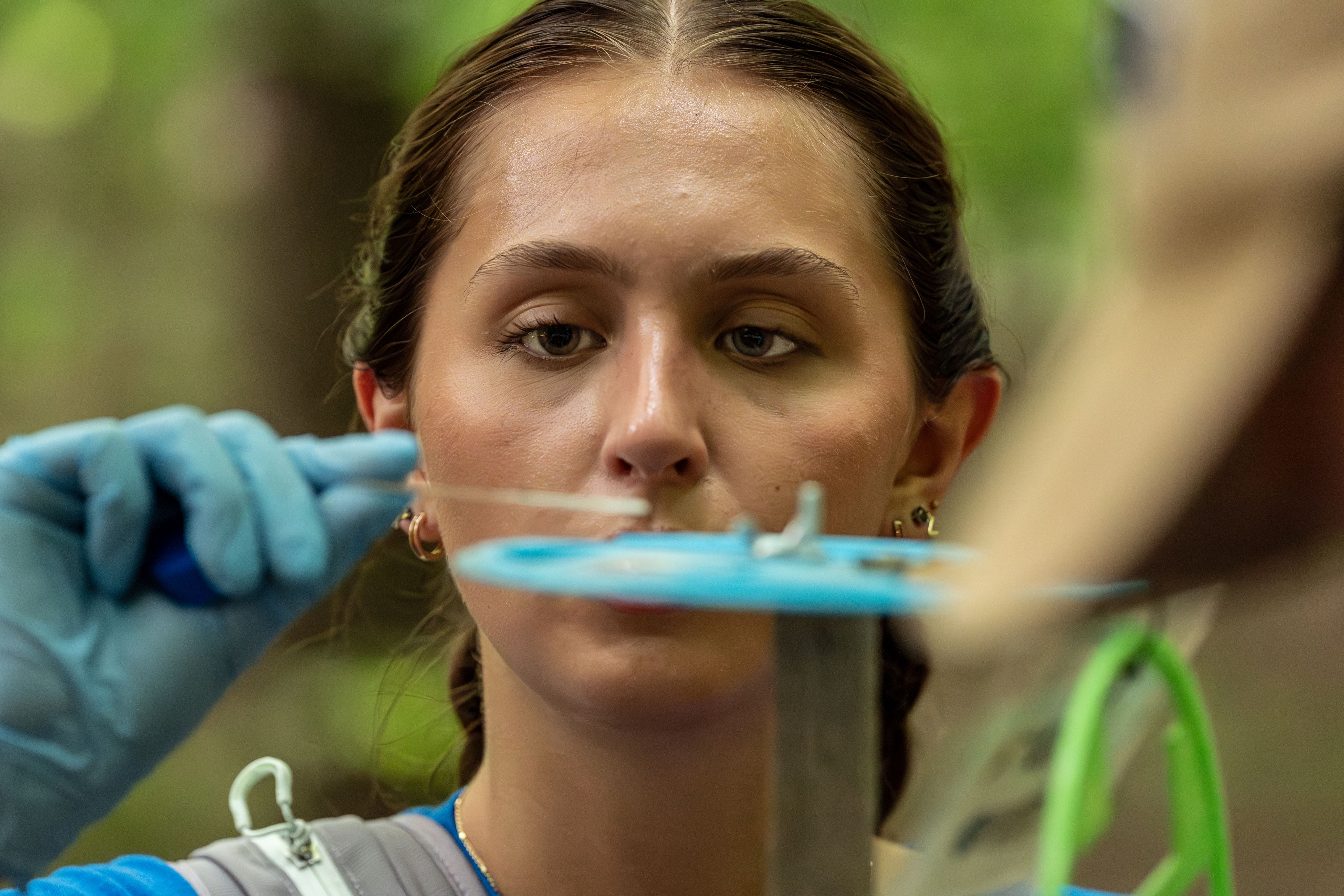
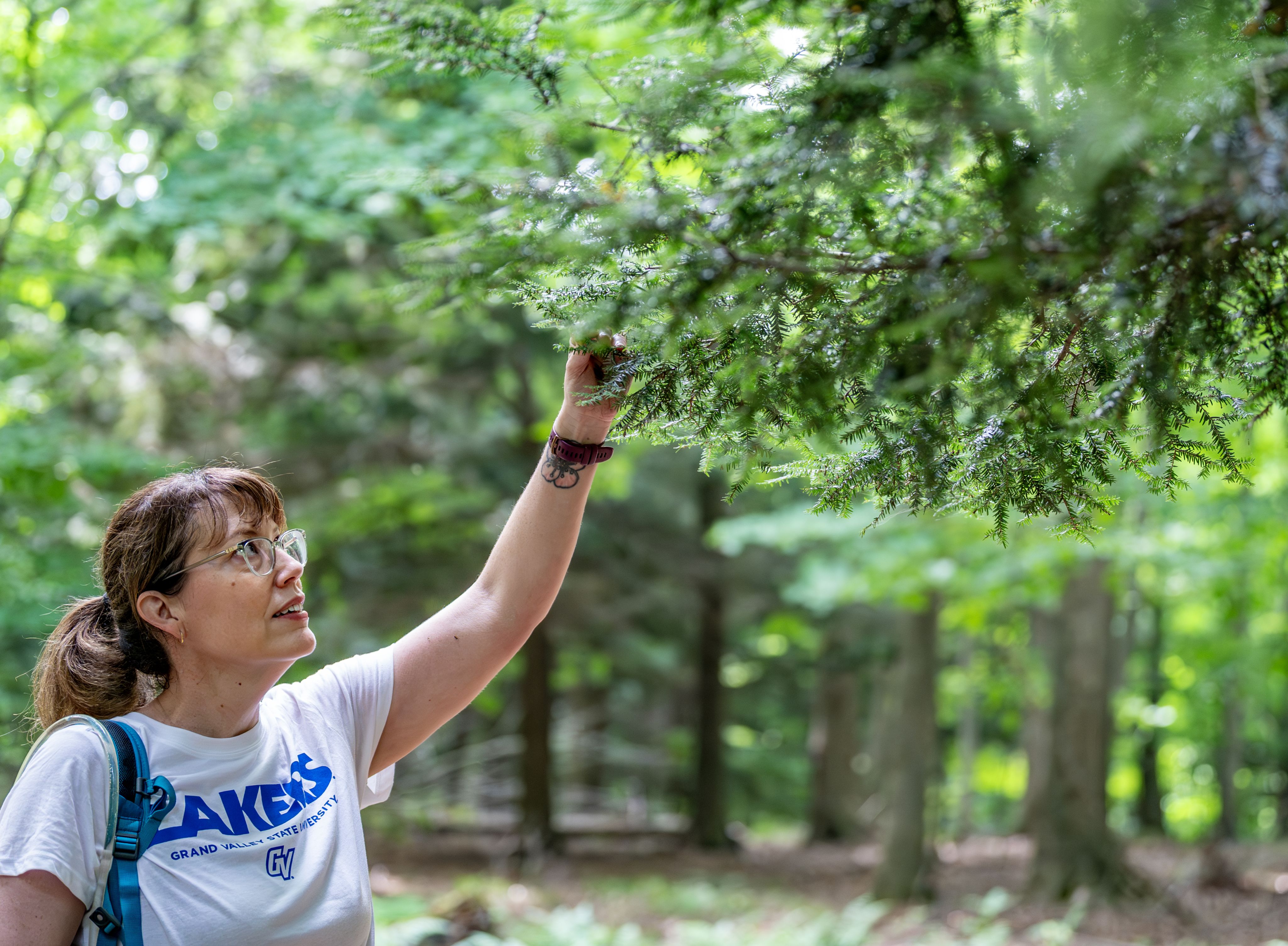
Biology major Zoe Gondeck works as part of a hemlock tree study at a Muskegon Conservation District site in Oceana County.
Biology major Zoe Gondeck works as part of a hemlock tree study at a Muskegon Conservation District site in Oceana County.
A $230,000 grant from the Michigan Invasive Species Grant Program is helping Partridge, associate professor at AWRI, monitor the progression of the tiny HWA in an attempt to slow its infestation through high-risk areas of Michigan forests.
The stakes are high. The eastern hemlock is a keystone species in North America’s forests, and a drop in its population would cause cataclysmic changes for the continent’s flora and fauna, Partridge said.
“HWA is probably one of the most devastating invasive pests that we have in North America, especially in northeastern forests,” she said.
“When you lose these eastern hemlocks, that community completely shifts. There would be major ecosystem changes.”

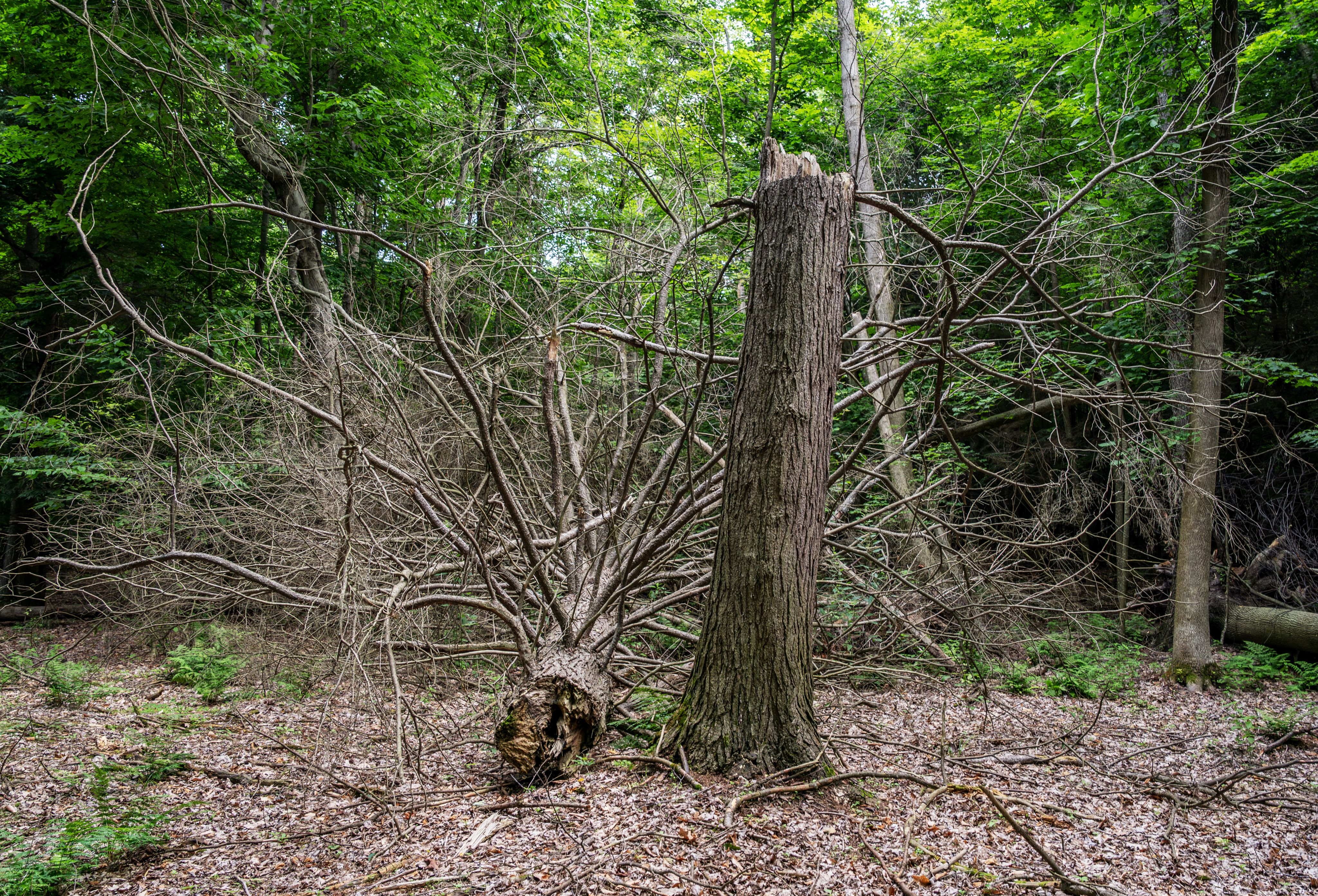

For starters, a depopulation of the hemlock would create gaping holes in a forest’s dense canopy, allowing sunlight to flood the forest floor and promote the growth of vegetation.
As if on cue, Partridge and her team come to a clearing. An enormous hemlock has fallen, creating an enormous breach in the canopy and allowing a wide band of sunlight to stream in and cover the forest floor.
“The eastern hemlock regulates the environment where they are found,” Partridge said. “It causes the soil to be a little bit more acidic, and it can regulate what other plants can grow in those areas.
“Instead of this nice walkway through the forest, you’re going to get more deciduous trees, bushes, shrubs, smaller trees and vegetation.”

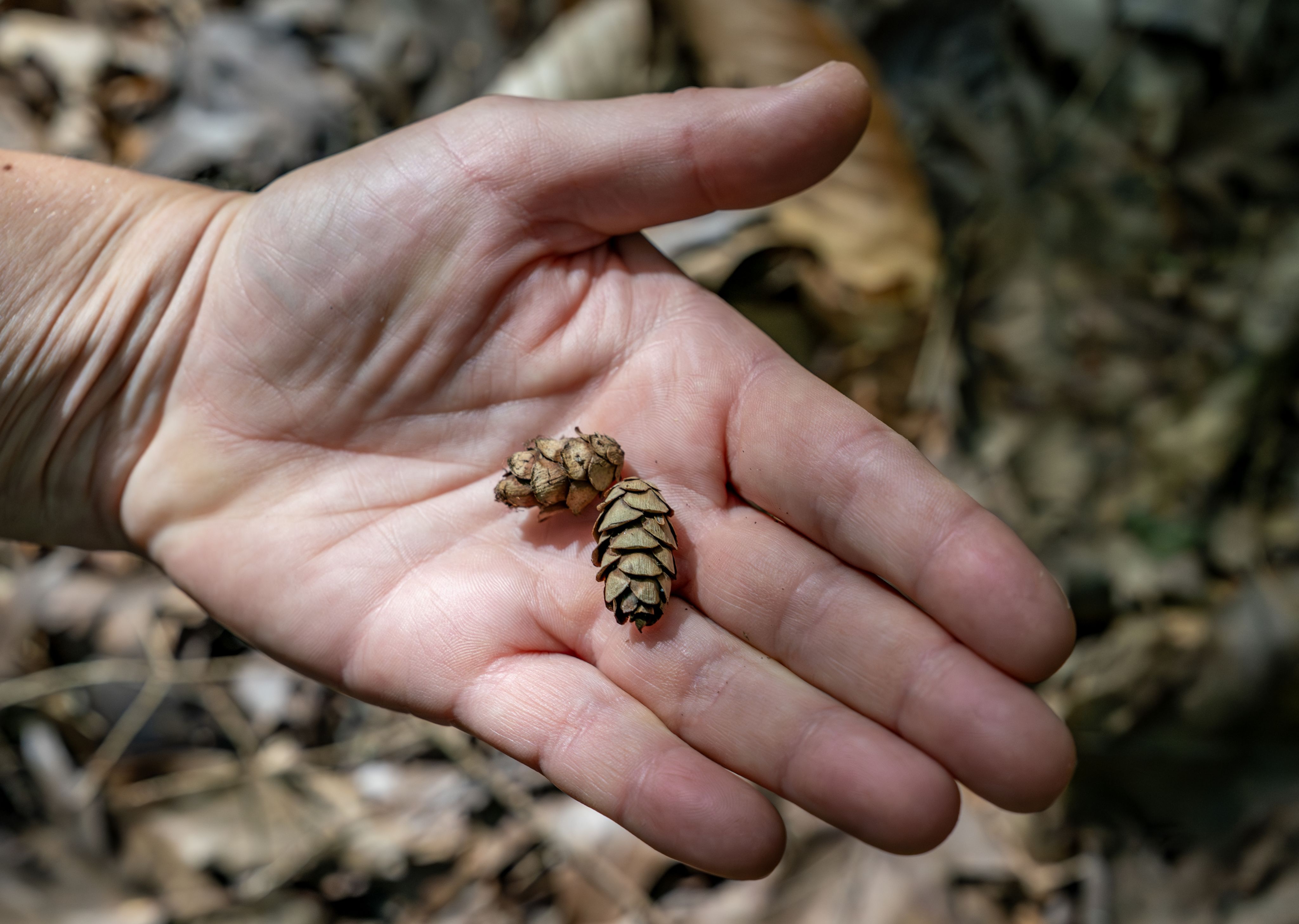
Biology grad student Grace Forthaus shows hemlock tree seeds while working on study at a Muskegon Conservation District site.
Biology grad student Grace Forthaus shows hemlock tree seeds while working on study at a Muskegon Conservation District site.
The abundance of sunlight would create a shift. More sunlight means more bushes and shrubs. More bushes and shrubs mean more arthropods, like ticks. And, because many hemlocks provide cover and shade of rivers, their presence regulates water temperatures for fish, Partridge said.
“If you lose all that cover, then your stream temperatures increase, and a lot of these cold-water fish are already on the edge of thermal tolerance,” Partridge said. “Those kinds of major ecosystem-level changes can really impact not only Michigan forests, but also fish species.”
Even the forest’s water cycle is at risk, Partridge added. Hemlocks play a large role in evapotranspiration, the process by which water evaporates from soil and waterways and is released from plants. A decline in hemlocks would significantly alter how water moves through the ecosystem.
“The eastern hemlock regulates the environment where they are found. It causes the soil to be a little bit more acidic, and it can regulate what other plants can grow in those areas."
Charlyn Partridge, associate professor ar AWRI

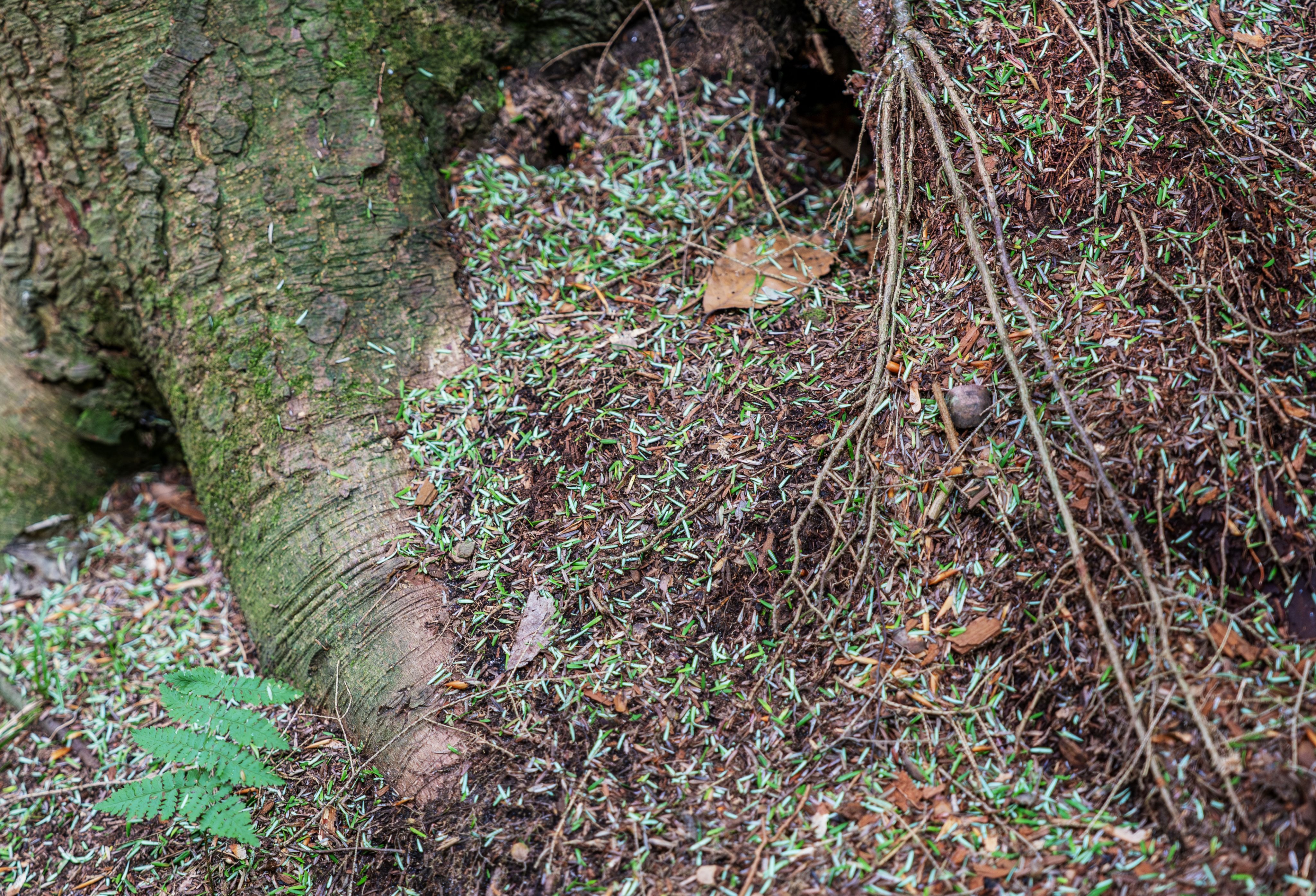
“This entire landscape would look completely different because of how much evapotranspiration involves the hemlock versus other deciduous trees or conifers,” she said.
Until recently, the expansion of HWA across the state was kept in check by Michigan’s winters and cold temperatures. But with warming temperatures, researchers are seeing HWA infestations throughout Michigan woods. HWA was first detected in Allegan County in 2016, and since then, it has swept up the West Michigan coastline and now affects counties as far north as Antrim County, Partridge said.
“Michigan’s highest hemlock density is in the Upper Peninsula, so that’s prime habitat for them to completely decimate,” she said. “There are forests in the northeast U.S. where they see 95% hemlock mortality.”
To track the elusive insect, Partridge and her team are employing two methods.
First, there are the discs placed throughout forests. The discs designed by Geller can not only determine the levels of infestation by HWA, but also other environmental factors that may alter a forest’s ecosystem. Thanks to the state’s grant, and through other partnerships, Partridge’s lab has strategically placed 260 traps around Michigan’s Lower Peninsula.
“When the idea of using these kinds of methods to detect HWA was first brought to us, we thought it would be interesting to just see if it would work,” Partridge said.
“Every time we have detected HWA using the traps, we have gone and looked in those areas and found an infestation in the trees.”

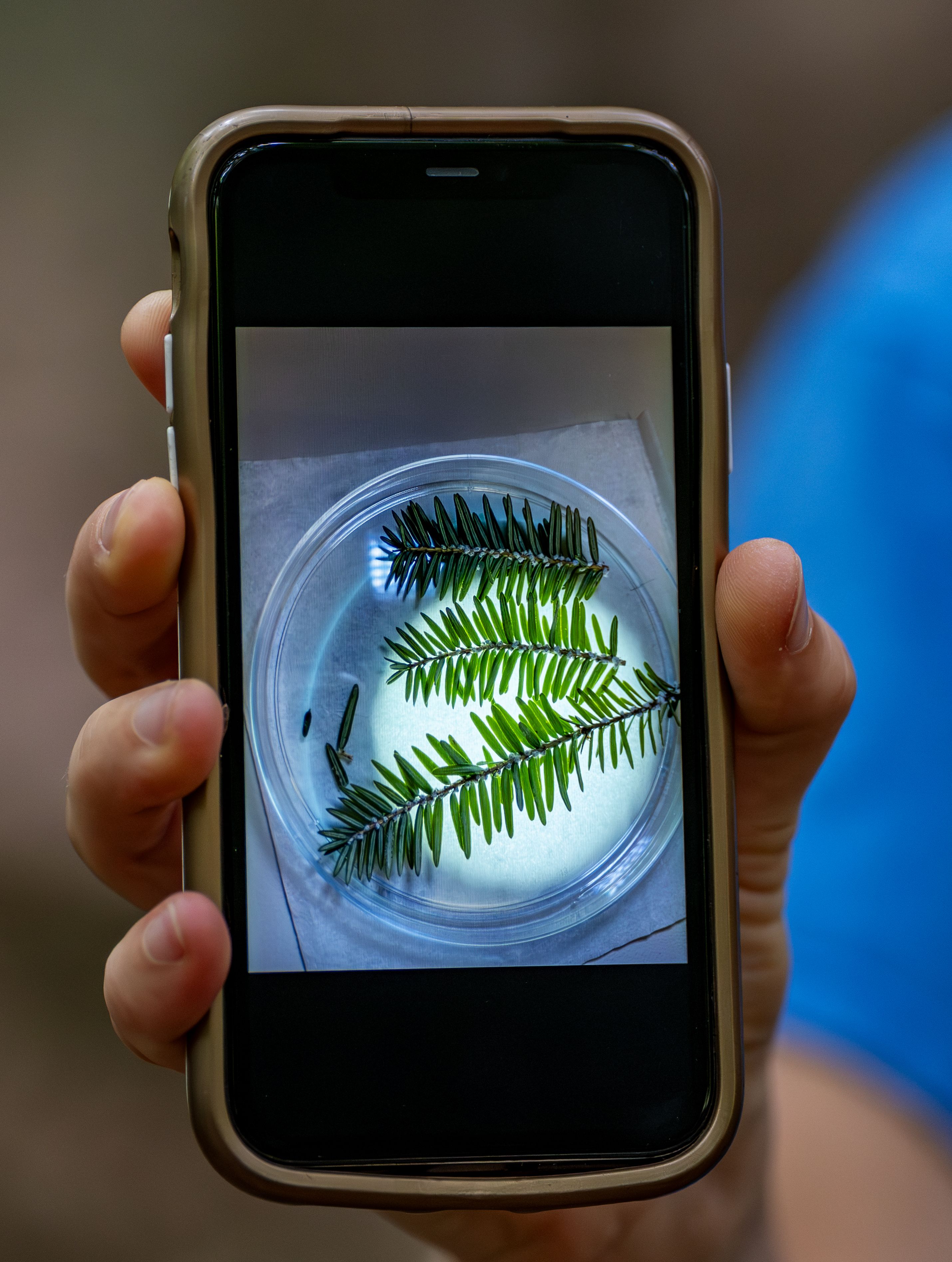

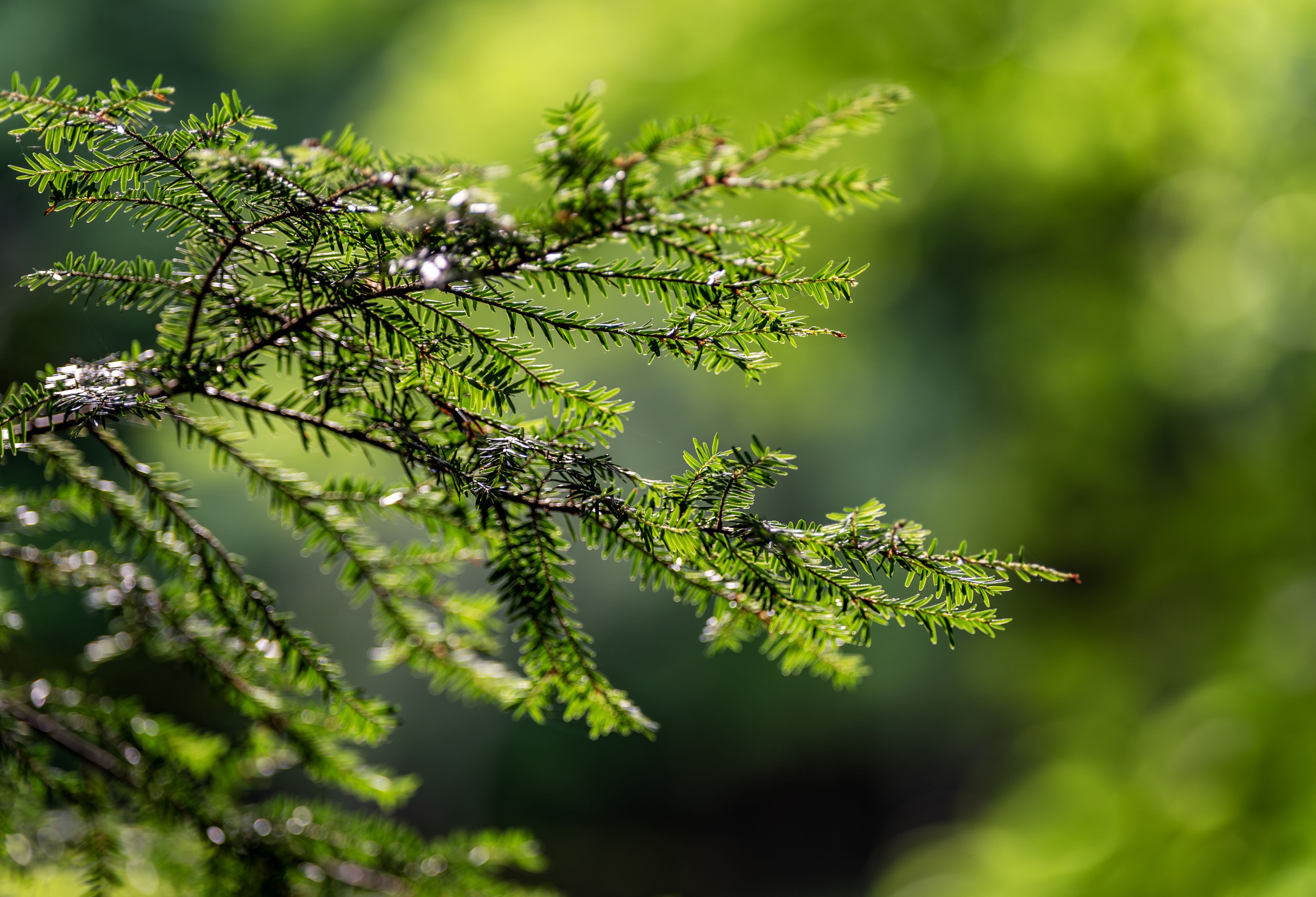

A second method of tracking was developed after conferring with colleague Ryan Otter. Otter, who’s been monitoring long-jawed orb weaver spiders for chemical contamination levels in U.S. waterways for more than 20 years, suggested analyzing spider webs for DNA traces of HWA.
“Kate did a trial study last year where we collected spider webs from an area of really well-known infestation,” Partridge said. “HWA DNA was one of the most abundant from insects in the webs.”
Because of HWA’s presence across a large swath of Michigan forest, Partridge’s monitoring efforts include a network of volunteers stretched across the state to check the hundreds of traps and monitor where HWA infestation is emerging.
In infestation zones, the state is treating hemlocks for HWA, Partridge explained, and studies have shown some signs of success. But for her and her lab it’s about understanding the invasion as much as stopping it.
“You’re slowing HWA as much as you can right now,” Partridge said. “It’s kind of the goal so you can understand it better and how effective treatments are.”