News from Grand Valley State University
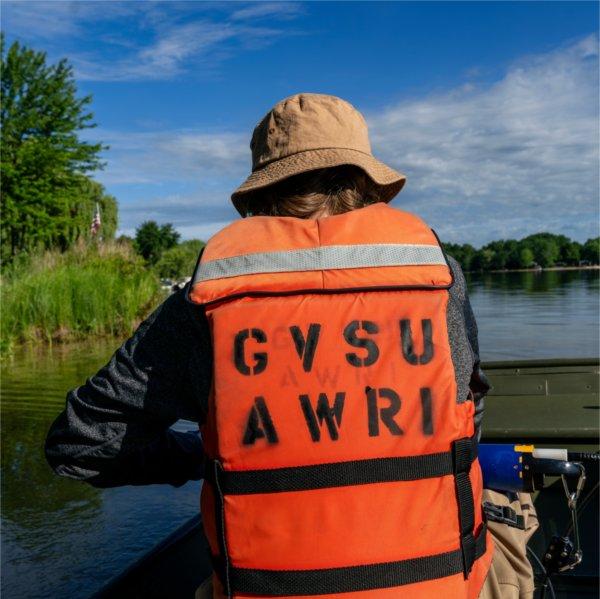
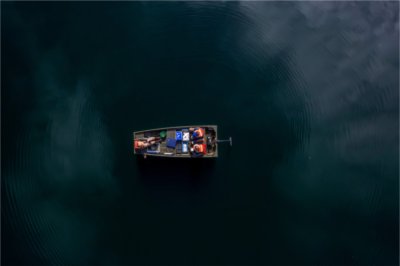
Three staff members from the Annis Water Resources Institute sit a boat on a lake.

GVSU study analyzes 50 West Michigan lakes for salt runoff

A GVSU project examining the salt content of three lakes in East Grand Rapids revealed concerning data that prompted researchers to expand their work to lakes across West Michigan this summer. 

Researchers at the Robert B. Annis Water Resources Institute in Muskegon measured salt levels within 50 West Michigan lakes, determining the effects of salt runoff from area roads and revealing a surprising discovery as a result.
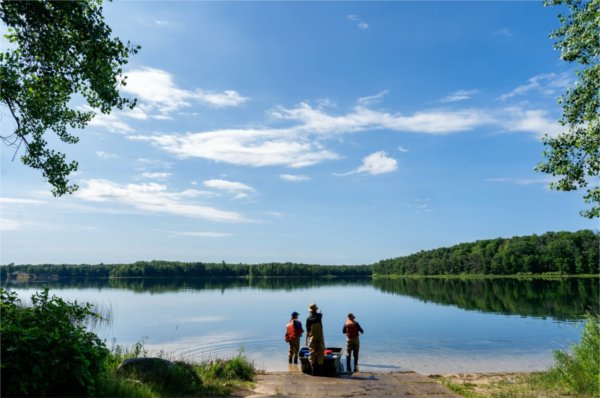
Three staff members from the Annis Water Resources Institute stand at the edge of a lake.
(From left) Alexis Porter, Mya Harmer and Katie Tyrrell, staff members with the AWRI's Steinman Lab, launch a boat at Nichols Lake in Newaygo County on June 24. Through funding by the U.S. Geological Survey, the AWRI conducted extensive research on lakes in West Michigan, studying salt content.
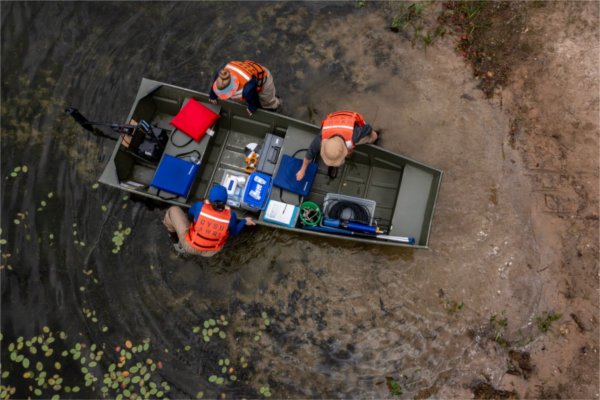
Three staff members from the Annis Water Resources Institute prepare a boat with supplies.
(Clockwise from top) Katie Tyrrell, Mya Harmer and Alexis Porter launch a boat onto Highbank Lake in Newaygo County on June 24. The three researchers were collecting data from the lake as part of a research project conducted by the Annis Water Resources Institute.

“There's been a recognition that there's been an increase in the amount of road salt being applied in the United States for road safety, particularly in the northern latitudes over the last 50 years,” said Al Steinman, the AWRI’s Allen and Helen Hunting Research Professor.

“In the last 10 years, there's been an increasing recognition that the salt is getting into our waterways — not just our lakes, but our rivers, our groundwater and our wetlands.”

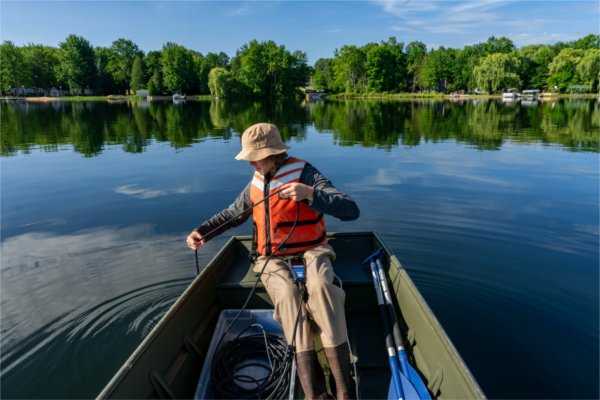
A person sitting at the end of a boat dropping a line down into the lake.
Mya Harmer, a staff member with the Steinman Lab, uses a water-quality monitoring instrument at McLaren Lake in Oceana County on June 24.
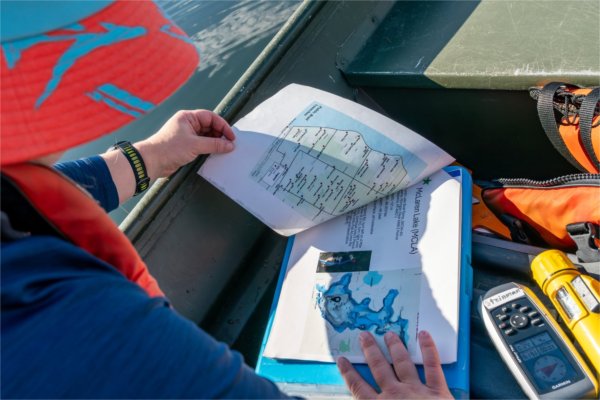
A person looks through papers on a blue clipboard.
Katie Tyrrell looks at a map while collecting samples at McLaren Lake.
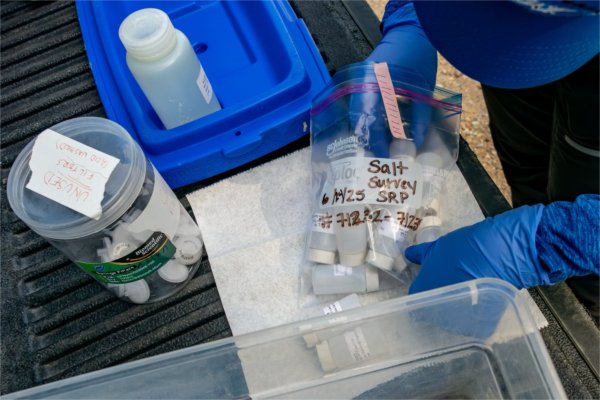
A person reaching into a plastic bag labeled "Salt Survey."
Alexis Porter, a staff member with the Steinman Lab, filters water samples for chemical analysis from the back of a truck at McLaren Lake.

The study, led by Steinman and assistant professor Sean Woznicki, was funded by the U.S. Geological Survey. Samples from 50 lakes across a five-county area — Lake, Mason, Muskegon, Newaygo and Oceana — were analyzed. 

“When a lake becomes full of too much salt, we see changes in the salinity that can impact the organisms living in the lake,” said adjunct research assistant Katie Tyrrell. 

“Salt water is denser than fresh water, so you have salt pollution that ends up settling to the bottom of the lake that can prevent the lake from turning over and mixing like it normally would.”

Three students wear life vests as they sit in a boat on a lake.
(From left) Mya Harmer, Katie Tyrrell and Alexis Porter collect samples on Highbank Lake.

Unlike the East Grand Rapids study, which showed significant salt contamination at the bottom of Church Lake, this summer’s project found little pollution in the other lakes.

“We were very surprised,” Steinman said. “We were very pleased that the problem wasn't as pervasive as we thought it was.”

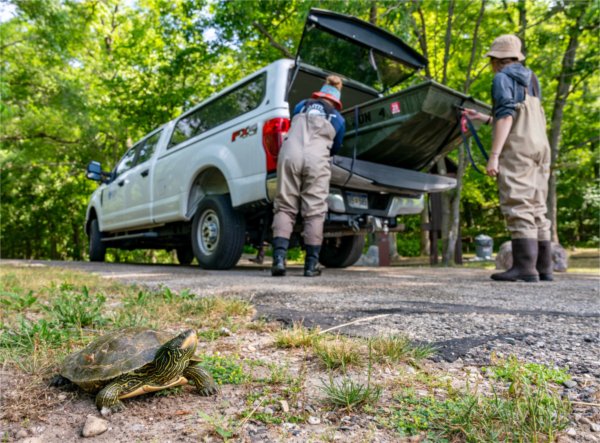
A turtle sits in the dirt while two people load a metal boat into the trunk of a car.
Katie Tyrrell, left, and Mya Harmer load a boat into a truck at Nichols Lake after taking water samples as part of the AWRI's research into salt contamination of lakes in West Michigan.

Subscribe

Sign up and receive the latest Grand Valley headlines delivered to your email inbox each morning.