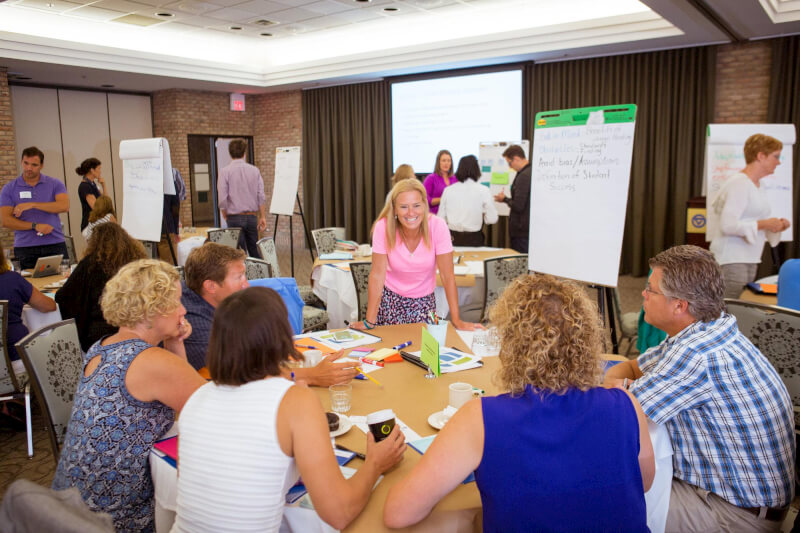
Photo by Kristina Bird.





Grand Valley senior Andrew Hereza is passionate about the design thinking process for two reasons: "It brings people together through its overt emphasis on diversity, inclusion and collaboration," and he wants to help make his fellow classmates more employable after they graduate.
"Young graduates now more than ever are entering into ambiguous careers without set end goals in mind," said Hereza, a political science and nonprofit and administration major. "Being flexible enough to adapt to changes in the work force is extremely important to differentiate yourself from the crowd."
Hereza's deep interest in design thinking is what called him to not only attend Grand Valley's K-12 Design Thinking Summit on August 15, but also co-found the newly formed Design Thinking Collaborative student organization along with Nikhil Watsa, a junior majoring in physics. The organization will aim to take students deeper into the design thinking process outside of the classroom.
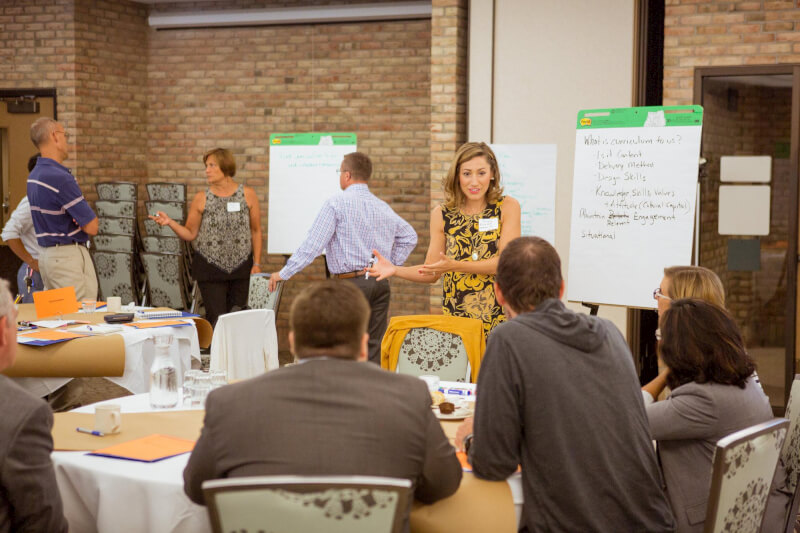
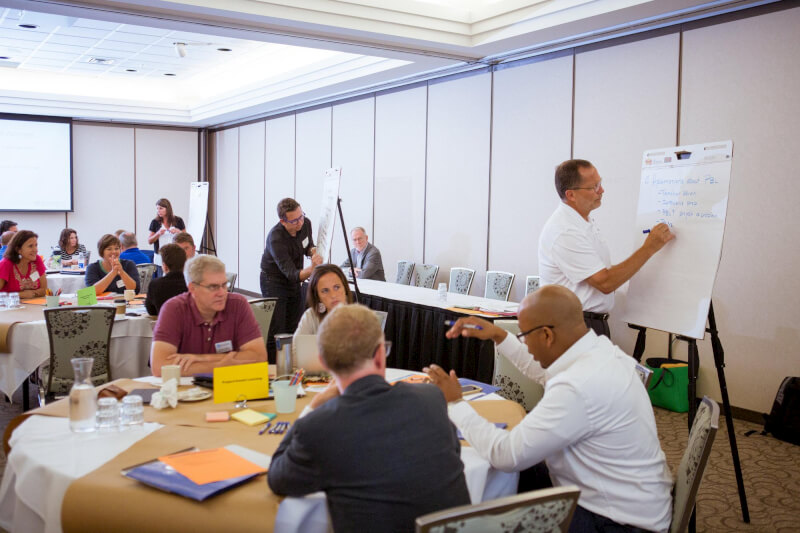
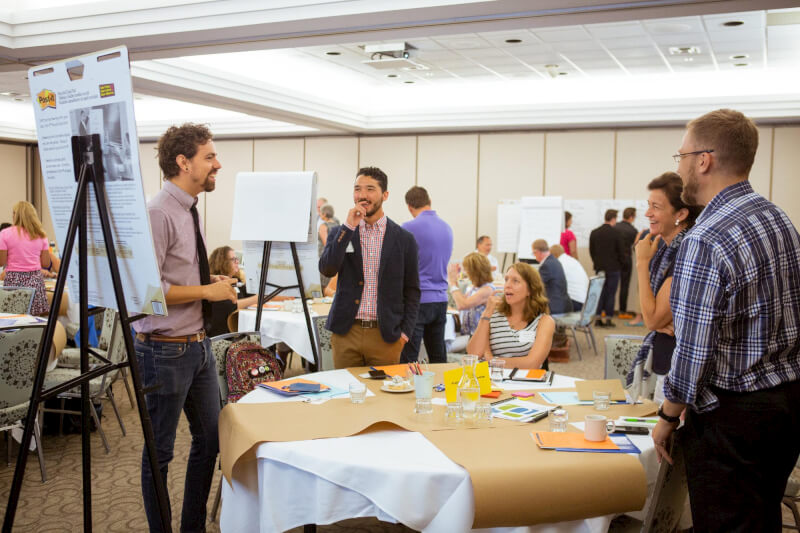
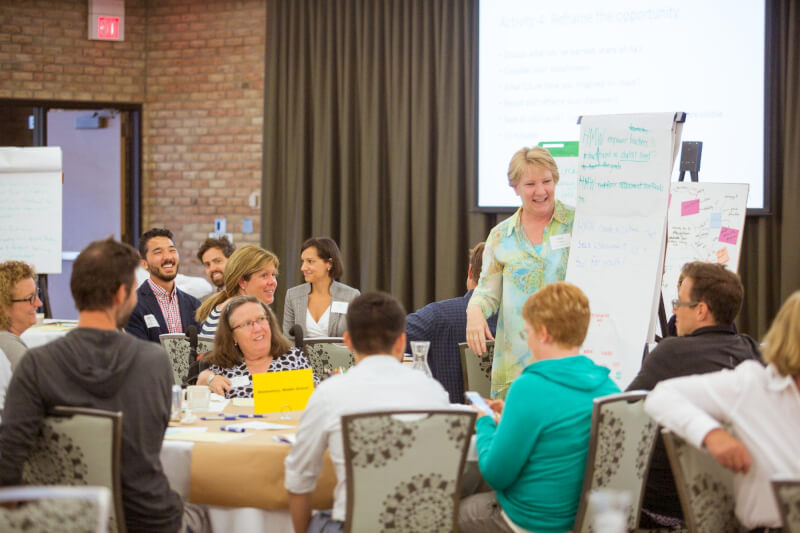
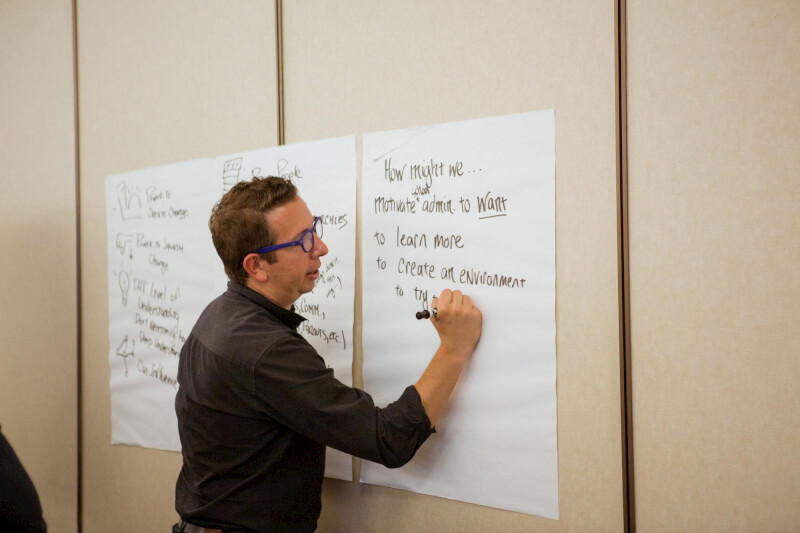
Sponsored by Grand Valley's Design Thinking Initiative, the day-long summit gave participants from local businesses and school systems, as well as Grand Valley students, the opportunity to hear design thinking success stories from academic institutions and practice the design thinking process through "deep-dive sessions." With blank easel pads, construction paper and markers, participants focused on framing certain issues by putting them in context and gained the experience of working together in interdisciplinary groups.
As a student, Hereza said collaborating with high-level Grand Valley faculty and administrators, K-12 educators and local business leaders was a welcomed experience.
"I was able to gain knowledge about what attributes and skills employers want out of college graduates," Hereza said. "Working with local educators was also a special treat. To empathize with their struggles by hearing their stories really brought the summit out of the abstract and into a real perspective."
Empathy, along with creativity and rationality are the three primary focuses of design thinking, which is generally defined as an interactive, project-based, problem-solving process.
David Tebo, superintendent of Hamilton Community Schools and summit participant, believes these primary attributes, along with another key trait of design thinking, should be introduced to students at the very beginning of their educational careers.
"The aspects of design thinking I like the most are the focus on continually learning, and that failure is a part of the process," Tebo explained. "The earlier we can teach students that failure and mistakes are parts of the learning process, the better off we are."
The combination of representatives from K-12 and higher education institutions meeting in one group-think environment is one of the main reasons why Tebo said he attended the summit.
"The summit allows multiple groups with various roles in the educational world to come together to learn more about Design Thinking and how it might have a positive impact on their classrooms, buildings or districts," Tebo said. "We have a number of teachers trained in project-based learning and design thinking who use these concepts in their classrooms, and we have even had a couple of teachers lead their building staff through the process to look at school improvement."
The Design Thinking Initiative, led by director John Berry, was created in 2014 to help ensure that Grand Valley students are equipped with the necessary skills needed to be successful in evolving work environments.
The initiative was created by Gayle R. Davis, Provost and executive vice president for Academic and Student Affairs. Because Grand Valley adheres to a liberal education tradition that encourages integrative thinking and analysis, Davis believes these skills and perspectives can be combined with any academic major to ensure students reach their maximum potential for success.
"Grand Valley offers students opportunities to acquire certain skills and knowledge that have arisen as key elements of today's world regardless of the field of study a student undertakes," said Davis. "Several years ago, I began exploring design thinking as another opportunity to offer our students to give them the best possible advantage in life."
During his opening remarks at the summit, President Thomas J. Haas said that while the Design Thinking Initiative will benefit Grand Valley as a whole over time, the ultimate focus revolves around looking toward the finish line first.
"We are looking at this as a professional development opportunity for our faculty and in terms of using it in our administrative functions as well," Haas said. "But, design thinking starts with the end in mind, and when we look at the university's end goal, that goal is student success."
For more information about the Design Thinking Initiative, visit www.gvsu.edu/designthinking.
Sign up and receive the latest Grand Valley headlines delivered to your email inbox each morning.