Confidence in the local economy has dipped to its
lowest levels in 13 years, according to an annual benchmark survey by
Grand Valley State university economist Hari Singh.
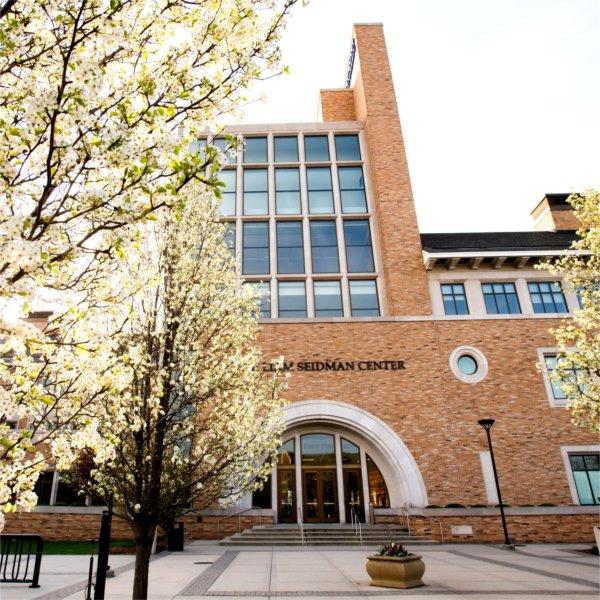
Singh, chair of the Economics Department in Grand Valley’s
Seidman College of Business, unveiled his annual economic forecast for
the regional economy on January 18. The survey includes business
leaders from Kent, Ottawa, Muskegon, and Allegan counties. The survey
was conducted in November 2007 across sectors. The respondents use a
scale from zero percent (no confidence at all) to 100 percent
(complete confidence).
“In our past surveys of the region for 13 years, when the economy
has been growing steadily at a robust rate, the confidence index has
depicted a high level of confidence — generally around 80 percent for
the private sector,” Singh said. “The confidence index has been
meandering around 65 since the recession in 2001. The results this
year show that business confidence in the private sector has come down
to 55.77 percent. This is the first year that overall confidence has
fallen below the 60 percent benchmark.”
According to the survey, employment is expected to be relatively
flat in 2008, and overall sales are expected to grow at a lower rate
of 1.5 percent for the year. “The decline in regional confidence and
sales reflect the ongoing restructuring and an expected slowdown of
the national economy,” Singh said.
The report notes that factors depressing expectations for 2007
and 2008 include the sub-prime housing market crisis, high energy
prices, and weak job growth prospects due to restructuring. “The
mortgage finance hardships along with the slump in the housing market
could not have come at a worse time,” Singh said.
"There is one bright spot — exports are expected to grow
around 5 percent during 2008. Executives should aggressively look for
export opportunities abroad. The low value of the dollar has created
new opportunities, especially in Europe and Canada," he said.
“The economy will continue to diversify away from manufacturing
into service sectors such as health care, financial intermediation and
education. The resources freed up from a decline in the manufacturing
employment need to be strategically leveraged to position ourselves in
growth sectors of the future. This means that in spite of difficult
times, the state needs to ensure it will create a highly qualified
work force for these new sectors,” Singh said.
He added that one alternative is to encourage innovation and
production in green technologies. “The higher prices of energy result
in approximately $30 billion leaving the state because we are so
dependent on outside sources. Many states across the nation are
undertaking ambitious goals to create more renewable energy
alternatives within the state,” he said. “Michigan needs to create a
consistent demand for renewable energy within the state by a Renewable
Portfolio Standard of 20 percent by 2020. Incentives for firms to
create renewable energy innovation and production within the state are
also needed. This policy will ensure that the resources freed up from
the manufacturing sector are utilized effectively in Michigan.”
GVSU Economist: Confidence in Local Economy Down
Jan 18, 2008


Subscribe
Sign up and receive the latest Grand Valley headlines delivered to your email inbox each morning.