
Blog
Art and Artificial Intelligence
September 01, 2025
Can Art and Artificial Intelligence Intersect?
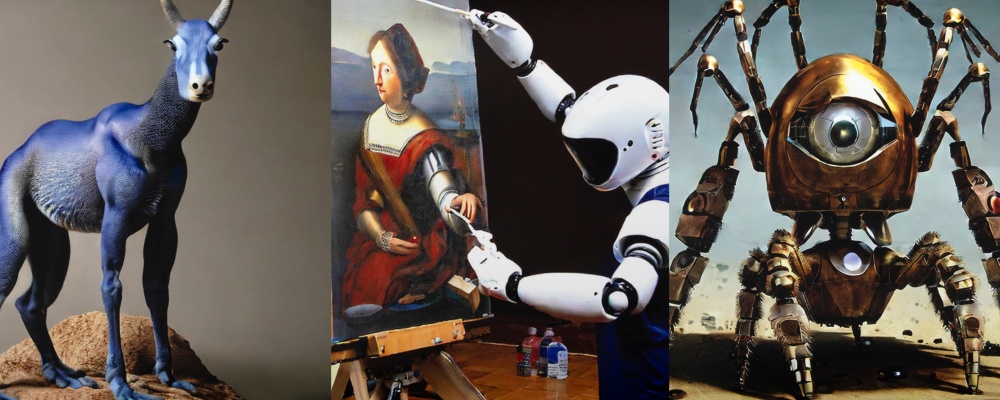
Artists have been using different tools and mediums to create since the beginning of human history, and now artificial intelligence (AI) has become one of those tools. Usage and complexity can vary by program, including programs used to create digitally born artwork like Midjourney and DALLE-2, or more familiar editing software with AI upgrades like Adobe Illustrator and Photoshop. These programs are being used to create billions of images, some of which are now being sold at auctions and displayed in museums. Art auction house Sotheby’s sold an artwork by an AI-powered robot for over one million U.S. dollars in 2024, and in 2025 Christie’s first AI-art auction was protested by thousands of artists calling attention an ugly truth: almost all AI-generated art is created by stealing.
Most artificial intelligence models scrape the Internet for the content they need to generate images, videos, and language. Many artists freely share images of their art online showcase their work, generate sales, create connections, and promote their brands. AI-data models steal this work without paying these artists for their content or getting consent to use it. Artists and companies such as Sarah Anderson, Getty Images, and Disney are raising the alarm, declaiming the usage of copyrighted work and bringing lawsuits. The response from tech companies has been mixed, with OpenAI adding a “refusal” response that blocks ChatGPT from creating artwork in the style of a living artist, and former Meta CEO Nick Clegg asserting that the AI industry would cease to exist if they paid artists for the right to use their work. This is a highly contentious issue, with no end in sight as AI continues to develop.
Additionally, there are also issues of human and environmental impact and resource consumption. We think of artificial intelligence models as algorithms, but someone has to train them. If we want our models to recognize harmful materials, then humans are the ones who train them on that kind of material. Employees who train these models are underpaid and many have experienced PTSD from exposure to violent and harmful imagery and video. In terms of resource consumption, it is actually harder to calculate than we have been led to believe, due to a myriad of factors including inaccurate disclosure from the AI companies, which energy grid your query goes through, and even the time of day you use it.
If you want to experiment with AI-generated artwork but would like to be mindful of artist rights, Adobe has released Firefly. Adobe Firefly pays licensing fees for the content their image generator pulls from, which means you can generate artwork knowing that the original content wasn’t stolen. There are limitations to this, since artwork such as Italian Renaissance paintings or 19th century ukiyo-e prints aren’t currently being created and therefore licensed for use. Regardless, Firefly has been incredibly popular, with over one billion images generated in its first three months back in 2023. Check out our analysis of using Adobe Firefly on this month’s mini-blog.