
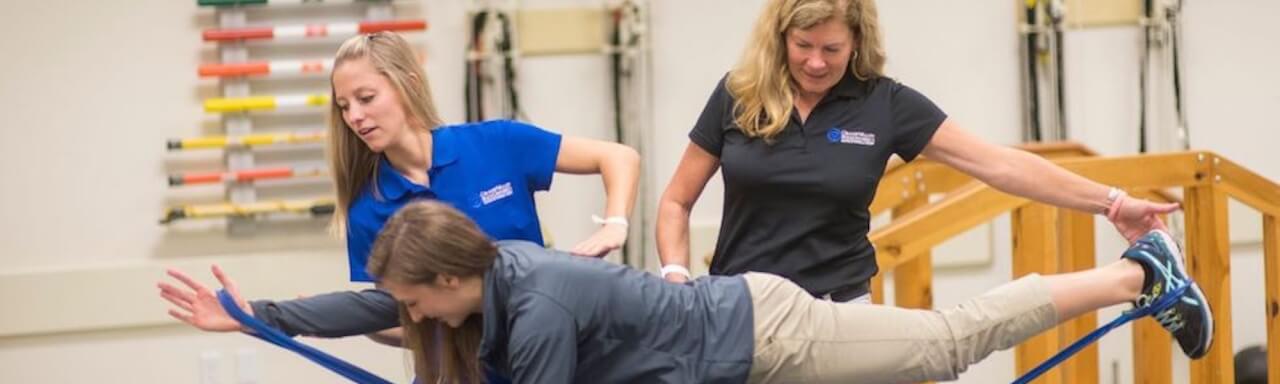
Doctor of Physical Therapy at Grand Valley State University
New Physical Therapy Curriculum Starting for the Class Starting Fall 2026!!
Grand Valley State University's Doctor of Physical Therapy degree is offered through the College of Health Professions. Physical therapists are valued for their ability to independently evaluate, diagnose, treat and prevent disorders of human movement in a wide variety of clinical and community settings. Our program features 15 full-time faculty members, 12 of whom hold advanced clinical practice certifications. Our program is well situated along the Medical Mile in Grand Rapids and enjoys an outstanding reputation among its students and in the community.
The Doctor of Physical Therapy Program at Grand Valley State University is accredited by the Commission on Accreditation in Physical Therapy Education (CAPTE), 3030 Potomac Ave., Suite 100, Alexandria, Virginia 22305-3085; telephone: 703-706-3245; email: [email protected]; website: https://www.capteonline.org. The program received its initial accreditation in May of 1985 and is fully accredited through April 30, 2034.
Contact Information
ACADEMIC ADVISING/CHP PROGRAM ADMISSIONS:
CHP Student Services Office @ [email protected]
Pass/Fail or Credit/No credit info
GVSU Physical Therapy requires all prerequisite courses to be completed with LETTER (A, B, C) or NUMERICAL (4.0, 3.0, 2.0) grades. Prerequisite courses completed with Pass/Fail or Credit/No credit will not fulfill the program’s admissions requirements. The program does accept AP credit (advanced credit) as the exception.
Source: EMSI, 2020
CAREER OUTLOOK AND OPPORTUNITIES
According to 2020 EMSI data, opportunities for physical therapists are expected to grow 12% in West Michigan, 11% in Michigan, and 13% in the U.S., which is above average growth when compared to many other occupations. EMSI reported a median annual wage of $85,758 in West Michigan and $87,609 in the U.S. for physical therapists with doctoral degrees. GVSU graduates of the physical therapy program could hold the following job titles:
- Physical Therapists
- Directors of Rehabilitation
- Pediatric Residents
- Travel Physical Therapists
- Clinical Directors
- Therapy Supervisors
Source: EMSI, 2020
The Skills Employers Want
The Doctor of Physical Therapy at GVSU will develop the skills you need to land the job you want. Whether the skills are advanced or general, you will build a resume of qualifications that are sure to attract employers. The following skills correlate with those pulled from actual job postings in the health sciences field.
Advanced Skills
- Physical Therapy
- Rehabilitation
- Home Care
- Treatment Planning
- Neurology
- Case Management
- Acute Care
Common Skills
- Presentations
- Communications
- Leadership
- Coordinating
- Research
- Customer Service
- Operations
- Infrastructure
- Management
Source: EMSI, 2020
Other Reasons to Study Physical Therapy at GVSU
- Experiential. The integrated curriculum allows students to use the skills that they learn in the classroom in a variety of clinical experiences.
- Individualized. Advanced topic electives offered in the last semester of the program allow for students to focus their courses on their interests.
- Competitive. The Physical Therapy program at GVSU has received national recognition by the US News and World Report.
- Accredited See below.
ARE YOU A GVSU ALUM?
Kris Cooper PT, DPT, OCS, MTC, FAAOMPT completed his Master’s degree in Physical Therapy at Grand Valley State University in 1999. He started his professional career in Chicago, where he took an enormous amount of post-graduate coursework and was board certified by the American Board of Physical Therapy Specialties as a Clinical Specialist in Orthopaedics (OCS) in 2001. He continued his post-graduate training with the Ola Grimsby Institute (OGI), completing a certification program in Manual Therapy and a year-long residency in Orthopaedic Manual Physical Therapy (OMPT) to earn his Doctorate in Physical Therapy (DPT) in 2004. He continued on with a post-doctoral fellowship in OMPT, becoming recognized as a Fellow in the American Academy of Orthopaedic Manual Physical Therapy (FAAOMPT) in 2006. During his time in Chicago, he began lecturing at professional meetings and teaching weekend continuing education courses to physical therapists. He also spent three years as the team physical therapist for the Chicago Cubs.
Kris and his lovely wife Lisa (a classmate in the GVSU PT program) moved to Kalamazoo, MI in 2007 and are extremely proud of their two sons in college (one at GVSU). Kris is the manager of NovaCare Rehabilitation in Kalamazoo and treats patients full-time at this busy outpatient orthopedic practice. His clinic serves as the official physical therapy partner for Western Michigan University (WMU) Athletics and he works closely with their medical staff to keep their student athletes on the field. He continues as an educator and mentor for physical therapists both locally and around the United States through online programs, weekend seminars and long-term courses. He provides guest lectures in both the Department of Physical Therapy and Department of Exercise Sciences at WMU.
Receiving the Dan Vaughn Distinguished Physical Therapy Alumni Award is a special honor for Kris as Dan served as a key role model and mentor who strongly influenced both the path of his career and his caring approach to treating patients.
Find Out More About Your Laker Lifetime Learning Account (L3)
Kris Cooper Distinguished PT Alumni 2026

Related Programs
The Physical Therapy Department at Grand Valley State University has partnered with Mary Free Bed Rehabilitation Hospital to provide students an opportunity for a residency in Neurologic Physical Therapy, Pediatric Physical Therapy and Orthopedic Physical Therapy.