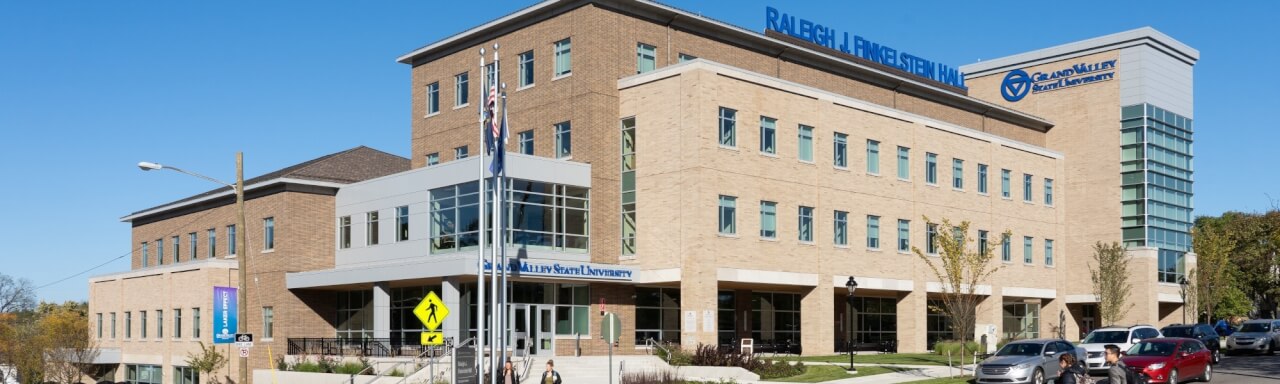
Occupational Science & Therapy at Grand Valley State University
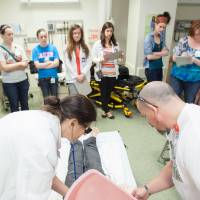
Collaboration with Corewell Health's Rehabilitation Unit and GVSU's OT & PT students.


GV Faculty Focus podcast features - Susan Cleghorn, DrOT, OTRL, TRS, CAPS, FNAP
The latest episode of the GV Faculty Focus podcast features CHP faculty member, and Director of the Post Professional Doctorate Program in Occupational Therapy, Dr. Susan Cleghorn.
The podcast is now available on all major podcast platforms!
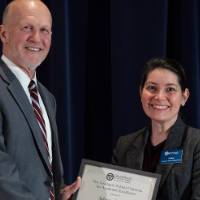
Dr. Cleghorn and GVSU President Mantella had a great conversation about her work, her teaching and how she incorporates community service into her instruction.
You can find more info and links to the episode on three major providers here:
https://www.gvsu.edu/president/faculty-focus-podcast-104.htm
Congratulations Dr. Cleghorn!
Why study at GVSU?
Options - Grand Valley's Occupational Science & Therapy department has four different programs. One traditional Master's program, one hybrid Master's program, one post-professional doctorate program and one MS/DrOT combined degree program.
Flexibility - As an applicant, you can select a traditional or hybrid platform at the Master's level. At the Doctorate level, you will have a fully online program. With the combined degree program, you will have a combination of traditional, hybrid and online learning.
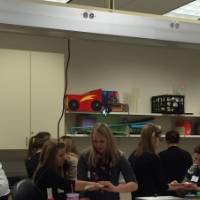
State-of-the-Art Facilities - Our health campus has an all-new Simulation Center, High Tech Laboratories and Learning Spaces.
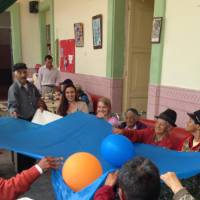
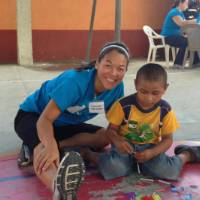
Unique educational opportunities - We offer outstanding faculty mentorships, learning alongside healthcare peers, and international Level I fieldwork in Ecuador and Guatemala.
Mission & Vision
Vision & Mission for the OT Program
Mission: The mission of the GVSU Occupational Therapy Department is to educate and empower students to have a positive impact on the health of individuals and groups in our society through innovation and leadership in occupation-based practice.
Vision: We envision the Occupational Therapy Department as a leader in developing critical thinking skills and reflective judgment through a transformative approach to education that considers the connection between occupation and health over the lifespan. Through faculty and student scholarship/research and student service in the community, graduates will emerge as professionals prepared to create and lead the future of occupational therapy.
Technical Standards
Technical Performance Standards Required for Classroom, Laboratory, and Fieldwork Experiences
Successful completion of the Master of Science degree in occupational therapy at Grand Valley State University requires that students meet specific cognitive, physical, and technical levels of performance. These specific levels of performance are termed the “essential functions” of the profession, and apply to the professional course of study, clinical experiences students have throughout the course of study, and throughout the actual practice within the field of occupational therapy.
Students must be capable of demonstrating expected and acceptable levels of performance in the following areas:
In the area of COGNITIVE skills, students will:
- Acquire, process, retain, and apply knowledge and information gleaned from various instructional methods, including written and oral formats, visual media, hands on laboratory experiences, clinical experiences, and through self-directed learning.
- Complete reading assignments involving professional journals, textbooks, and related sources that are directly or indirectly related to the field of occupational therapy.
- Develop the skills necessary for analyzing, interpreting, applying, and critiquing information stemming from assigned readings.
- Measure, calculate, reason, analyze, and synthesize information specific to patient care.
- Apply theoretical concepts to practice-related problems.
- Effectively identify and solve problems using clinical reasoning, theoretical application, and evidence-based practice skills.
- Use and apply appropriate mathematical and basic statistical skills.
- Recognize and appreciate the relationship between the client, the environment, and the choice of intervention as well as how a change in one of these factors elicits change in the others.
- Orally present information to classmates, instructors, as well as fieldwork supervisors.
- Participate in and appropriately share the workload within a group setting.
- Maintain attention for 2-3 hours without interruption, as well as sustaining expected class performance and behaviors during days when class spans 8-10 hours.
- Produce written documentation and assignments in the appropriate APA styling.
- Recognize the need for and apply safety knowledge and judgment in a variety of situations.
- Demonstrate ethical reasoning and decision making.
In the area of PHYSICAL skills, students will:
- Tolerance for a seated position for 2-3 hours with minimal interruption, as well as sustaining this during days when class spans 8-10 hours.
- Demonstrate the physical strength to assist and individually perform all types of patient transfers and lifts from a variety of surfaces and levels. This can include lifting over 50 pounds on an infrequent basis.
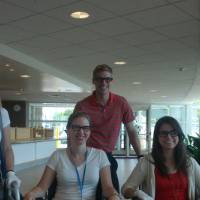
- Demonstrate the skills and competence to transport patients in wheelchairs and other mobility devices, as well as the ability to assemble and disassemble the parts and accessories associated with these devices.
- Demonstrate the ability to perform expected job duties while standing, sitting, or kneeling/squatting. These duties can include: lifting, reaching, bending, stretching, pushing, or pulling in order to support or assist a patient.
- Demonstrate adequate levels of postural control, eye/hand coordination, strength, as well as integrated senses of vision, hearing, tactile, vestibular, and proprioception in order to effectively utilize and demonstrate common occupational therapy assessment tools, equipment, devices, materials, and supplies.
- Tolerate close physical contact with others, including classmates, instructors, patients, and clinical instructors for both educational and practice purposes.
- Be capable of coordinating motor skills with environmental safety concerns in order to effectively respond to emergency situations quickly and appropriately.
- Tolerate travel to various fieldwork and community practice locations.
- Must effectively and sensitively communicate patient information to patients, family members, clinical instructors, and other members of the therapeutic team.
- Must be able to demonstrate either the auditory capability or the use of an effective compensatory strategy to recognize the sounds of power equipment, wheelchairs, as well as monitoring devices to ensure patient safety at all times.
- Must be able to demonstrate the visual skills or a related compensatory strategy necessary to accurately observe, describe, and analyze patient performance in classroom, laboratory, simulation, and fieldwork settings.
In the area of INTERPERSONAL SKILLS, COMMUNICATION SKILLS, AND PROFESSIONAL BEHAVIORS, students will:
- Maintain appropriate emotional and mental health required to exercise sound judgment, complete all assigned tasks, as well as to develop and maintain appropriate therapeutic relationships.
- Demonstrate an array of positive interpersonal skills including, but not limited to, cooperation, flexibility, empathy, and confidence.
- Collaborate effectively with classmates, instructors, patients, family members, as well as members of the therapeutic team.
- Demonstrate the ability to effectively and clearly communicate using the English language in both oral and written forms; this includes utilizing proper spelling, punctuation, and grammar in order to teach specific skills and procedures.
- Be capable of adjusting the level of language used to match the skills and education level of the intended audience, including patients, family members, classmates, instructors, as well as other members of the therapy team.
- Demonstrate and effectively utilize active listening and non-verbal communication skills to enhance therapeutic interactions.
- Be appropriately assertive as required to: participate in class discussions, initiate and lead the therapeutic process, and to set appropriate limits and boundaries with patients.
- Exhibit professional demeanor and attire at all times, both in the classroom, fieldwork setting, and community lab experiences.
- Demonstrate organizational and time management skills in order to prioritize activities, assignments, and responsibilities effectively.