
Michael Wolfe
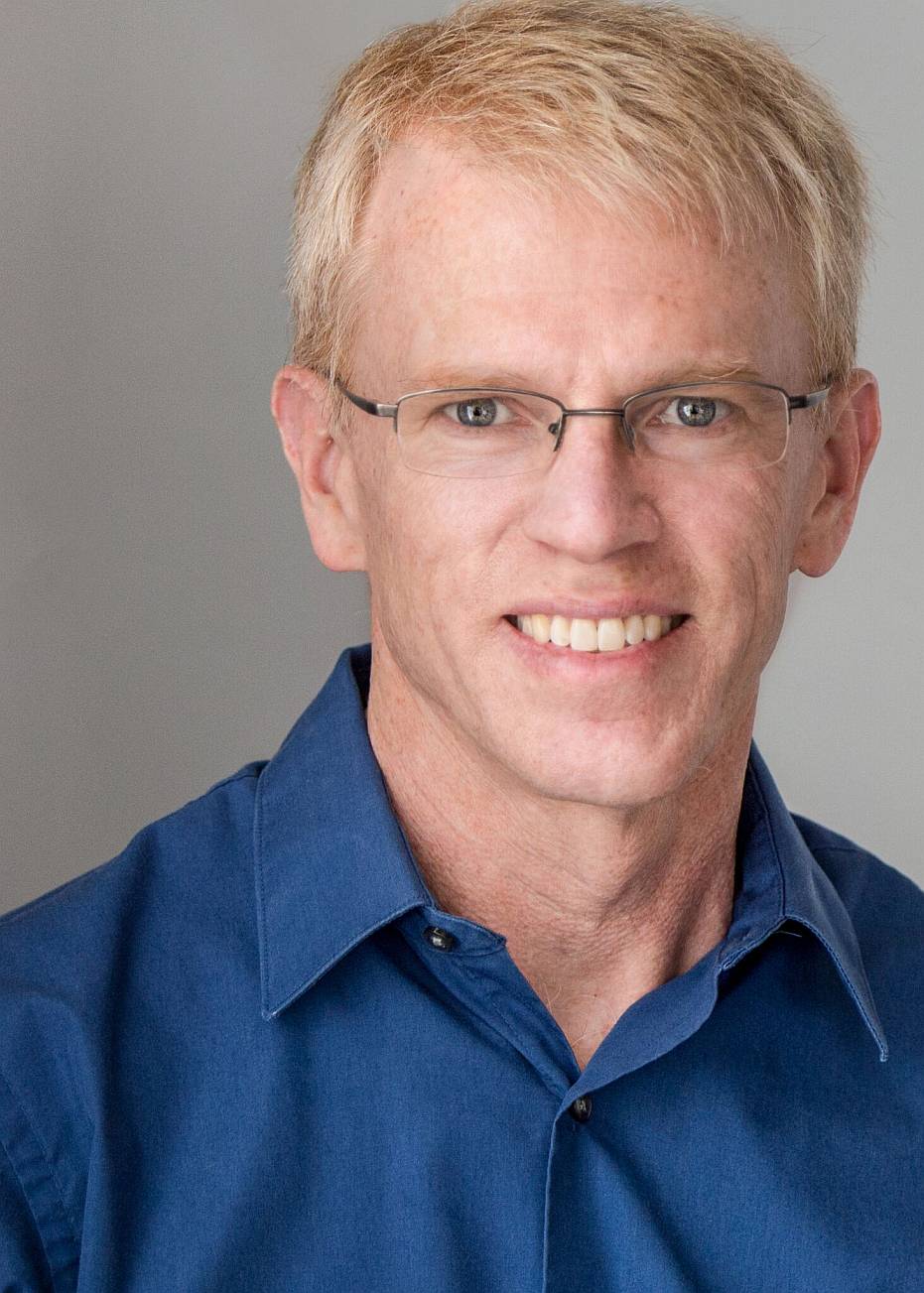
Professor - Cognitive Psychology
- B.A., University of California - Santa Barbara
- M.A., Ph.D., University of Colorado - Boulder
Office: 2321 Au Sable Hall
Phone: (616) 331-2989
Email: [email protected]
Website: Social Cognition Lab website
Specialization
Cognitive, Educational
Courses Taught
PSY 101 - Introductory Psychology
PSY 325 - Educational Psychology
PSY 365 - Cognition
PSY 492 - Advanced General Capstone
Research Interests
I am interested in the cognitive processes that people engage in while learning. In my research, I address the way in which knowledge is represented in the mind, as well as how knowledge changes during learning, and what factors influence learning. Much of this work involves the cognitive processes that take place when we comprehend text. For example, how do we go about connecting the different ideas that we encounter as we read? How do we integrate the information we are learning about with things that we already know? How do we change our comprehension processes when we read information we believe or do not believe?
In my experiments on text comprehension, I also utilize computational models of various cognitive processes. Computational models are computer programs that are designed to implement theories about how the mind works. One model I work with (Latent Semantic Analysis) simulates how all of our knowledge might be represented in the mind. Another model, (the Construction-Integration model) simulates the cognitive process that take place during text comprehension. These models aid in research on text comprehension by, for example, providing predictions about what information people will remember from a text based on the way in which the text is written. They also can be used in a practical way to improve comprehension.
Current Research
1. How do reading processes change when people read information that is consistent or inconsistent with beliefs they hold? What factors influence the extent to which we will change our beliefs in response to information?
2. When our beliefs do change, why do we seem to be relatively unaware of these changes? Why do we also seem to be relatively unaware of changes to other aspects of our selves, such as our health?
3. How do our beliefs influence our ability to reason about arguments or information that is consistent or inconsistent with their beliefs?
Michael’s talk at TEXx Kalamazoo
https://www.youtube.com/watch?v=deiOztAvcGI
Michael’s talk at Psychonomics, 2021
Representative Publications
(Some of these papers can be downloaded for personal use. If you would like permission to use a reprint for a book or course pack, please contact the publisher.)
Wolfe, M. B., Williams, T. J., Denison, A. J., & Hart, L. W. (2024) Verification of past beliefs influences current beliefs. The Open Psychology Journal, 17, 1-13. pdf
Wolfe, M. B., & Bowdle, B. F. (2024). Textbase and situation model representations as educational constructs. Discourse Processes, 61, 342-346. pdf
Hart, L., Wolfe, M., Williams, T. J. & Russell, G. (2024). Belief change after reading predicts argumentative essay content. Instructional Science, 53, 151-172, pdf
Wolfe, M. B. & Williams, T. J., Dewey, E., Mitchell, J., Pomp, A. & Wolfe, B. (2023). Awareness of health change is associated with weight loss following bariatric surgery. Health Psychology, 42(6):403-410. doi: 10.1037/hea0001279. PDF
Wolfe, M. B. & Williams, T. J. (2018). Poor metacognitive awareness of belief change. Quarterly Journal of Experimental Psychology, 71, 1898-1910.
https://journals.sagepub.com/eprint/WkSnGSiPrqik7WURTaSu/full
Wolfe, M. B. & Griffin, T. D. (2018). Beliefs and discourse processes. In M. F. Schober, D. N. Rapp, & M. A. Britt (Eds). Handbook of Discourse Processes, 2nd Edition. (pp. 295-314). New York, NY: Taylor & Francis. (pdf)
Wolfe, M. B. & Kurby, C. A. (2017). Belief in the claim of an argument influences perceived argument soundness. Discourse Processes, 54, 599-617.
https://www.tandfonline.com/eprint/jiRhsrH763zVtqFjBNak/full
Wolfe, M. B. & Williams, T. J. (2017). Effects of text content and beliefs on informal argument evaluation. Discourse Processes, 54, 446-462.
https://www.tandfonline.com/eprint/gnDaH2anixi3Icd8aNvk/full
Wolfe, M.B., Tanner, S.M., & Taylor, A. (2013). Processing and representation of arguments in on-sided texts about disputed topics. Discourse Processes, 50, 457-497. pdf
Wolfe, M. B. W. & Woodwyk, J. (2010). Processing and memory of information presented in narrative or expository texts. British Journal of Educational Psychology, 80, 341-362. pdf
Wolfe, M. B. W. & Mienko, J. A. (2007). Learning and memory of factual content from narrative and expository text. British Journal of Educational Psychology, 77, 541-564. pdf
Wolfe, M. B. W. & Goldman, S. R. (2005). Relations between adolescents’ text processing and reasoning. Cognition and Instruction, 23, 467-502. pdf
Wolfe, M. B. W., Magliano, J. P., & Larsen, B. (2005). Causal and semantic relatedness in discourse understanding and representation. Discourse Processes, 39, 165-187. pdf
Wolfe, M. B. W. (2005). Memory for narrative and expository text: Independent influences of semantic associations and text organization. Journal of Experimental Psychology: Learning, Memory, and Cognition, 31, 359-364. pdf
Wolfe, M. B. W., & Goldman, S. R. (2003). Use of Latent Semantic Analysis for predicting psychological phenomena: Two issues and proposed solutions. Behavior Research Methods, Instruments, and Computers, 35, 22-31.
Wolfe, M. B. W., Schreiner, M. E., Rehder, B., Laham, D., Kintsch, W. Landauer, T. K (1998) Learning from text: Matching readers and text by Latent Semantic Analysis. Discourse Processes, 25, 309-336.