Biomedical Sciences
Suganthi Sridhar


Phone: 616-331-3318
Fax: 616-331-2090
A. Nieuwkoop, Ph.D., Chair
nieuwkot@gvsu.edu

Grand Valley State University
312 Padnos
Allendale, MI 49401

Suganthi Sridhar

Assistant Professor
Biomedical Sciences Department
220 A Padnos Hall
Allendale, Michigan 49401
Phone:  616-331-2391
Fax:  616-331-2090
email: 
sridhars@gvsu.edu

OFFICE HOURS:
See available times here,
or by appointment


COURSES TAUGHT
BMS 290 - Human Physiology
BMS 291 - Physiology Lab
BMS 301 - Introduction to Research
BMS 311 - Pharmacology
BMS 495 - Concepts in Wellness (Capstone)

EDUCATION/TRAINING
Postdoctoral Fellow, Lab of Integrin Signaling & Tumorigensis, VanAndel Institute, Grand Rapids, MI
Postdoctoral Fellow, Pharmaceutical Chemistry, Higuchi BioscienceCenter, University of Kansas, Lawrence, KS.
Ph.D. Physiology, School of Medicine, Southern Illinois University
M.Sc. Biochemistry, Madras University, India
B.Sc. Biochemistry, Madras University, India

RESEARCH INTERESTS
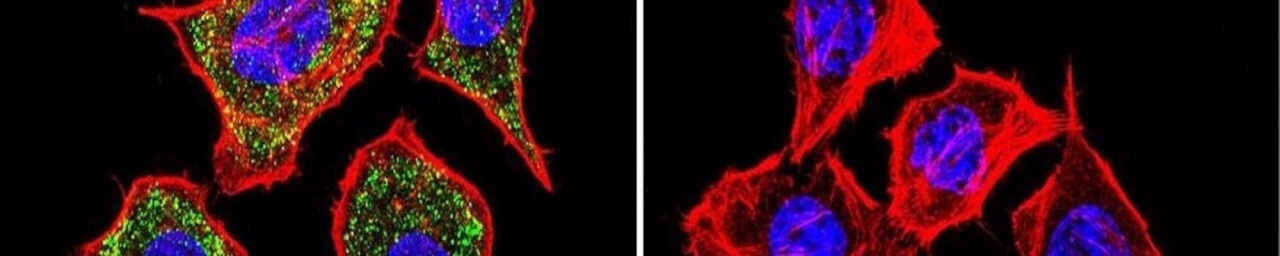
My research interest is in the field of prostate cancer, in identifying the role of a metastatic tumor suppressor protein called CD82 (KAI1 gene). CD82 expression is lost during prostate tumor progression to metastasis.  Loss of CD82 expression has also been recently shown to correlate with metastasis in a number of invasive cancers. The mechanisms by which cancers become metastatic are not clear. CD82 has been shown to associate with membrane proteins such as integrin and receptor tyrosine kinases (EGFR, Met). During my postdoctoral work at the VanAndel Institute, I have re-expressed CD82 to normal levels in metastatic prostate tumor cell lines. Re-expression of CD82 in these tumor cells reduced invasion in vitro, and suppressed integrin- or HGF-mediated activation of the receptor tyrosine kinas c-Met. Conversely, we have also shown that suppression of CD82 expression in normal cells increases integrin mediated c-Met activation. Signaling through c-Met is required for cell migration and invasion in metastatic prostate tumor cells, which is over expressed in all metastatic prostate cancers. The exact mechanism by which CD82 regulates c-Met is my current research focus. Preliminary data suggests that CD82 may be causing either a decrease in c-Met cell surface aggregation or may be bringing in a c-Met specific phosphatase in close proximity, and thereby regulating c-Met phosphorylation/ activation. There is indication also that CD82 may be regulating one of the four phosphorylation sites that are required for activation of Met. Both these mechanisms of CD82 regulation and the significance of the regulation of one specific phosphorylation site in Met are currently under investigation.

Another project in the lab is involved in analyzing the difference in gene expression between prostate cancer cells with or without CD82 using Agilent micro array technology. Two clones of PC3 cell lines, one transfected with a vector (PC3-5V) and another with CD82 cDNA (PC3-29) were analyzed using micro array Agilent technology. The micro array data was analyzed using a Limma-R program to identify the genes regulated by CD82. The micro array analysis is complete and we are currently looking at the top ten genes that are statistically significant and analyzing the significance of the up and down-regulation of these proteins in these cells. The results are being further validated by RT-PCR and western blot analysis. In addition more (prostate tumor) clones expressing CD82 and normal prostate cells with or without CD82 (by CD82 siRNA) will also be analyzed to reconfirm the results.

PUBLICATIONS
1. Jumaa M., Chinnaswamy S., Svetlana S, and Stella, V.J. “Degradation of NSC-281612 (4-[bis[2-[(methylsulfonyl)oxy]ethyl]amino]-2-methyl-benzaldehyde), an experimental antineoplastic agent:  The effect of pH, solvent composition, (SBE)7m-[[beta]]-CD and HP-[[beta]]-CD on stability". Journal of Pharmaceutical sciences, Vol 93, 2004.
 2. Sridhar S.C, and Miranti, C.K. 2005. “Tumor Metastasis Suppressor KAI1/CD82 is a Tetraspanin” in Contemporary Cancer Research: Metastasis.  Eds. C. Rinker-Schaeffer, M. Sokoloff and D. Yamada. 
 3. Sridhar, S.C., and Miranti, C.K. 2006. Tetraspanin KAI1/CD82 Suppresses Invasion by Inhibiting Integrin-Dependent Crosstalk with c-Met Receptor and Src Kinases. Oncogene, 25 (16).P: 2367-2378.
  Last Modified Date: September 10, 2009
Copyright © 1995 - 2009 Grand Valley State University is an Equal Opportunity/Affirmative Action Institution